Getting It Booked In
Wellington sits roughly 11 miles out from West Palm Beach, one of the longer hauls in the service area we cover. We don't keep a branch out here, so every job starts with a truck leaving West Palm Beach loaded for what a 1990s-era door is likely to need - idler pulleys, short sections of roll-formed track, and the right roller size for an extension-spring setup rather than torsion. That means when you call, we ask a few questions up front: whether the door is stuck open or shut, whether anything is visibly bent from outside, and roughly how old the opener is. The answers tell us which parts to bring so we're not making a second trip for a part we could've grabbed the first time. We book the job, give you a window, and head out. If it's clearly more than an off-track roller - a bent track section needing full replacement, say - we'll tell you that before the truck leaves, not after we're standing in the driveway looking at it.
The Complications
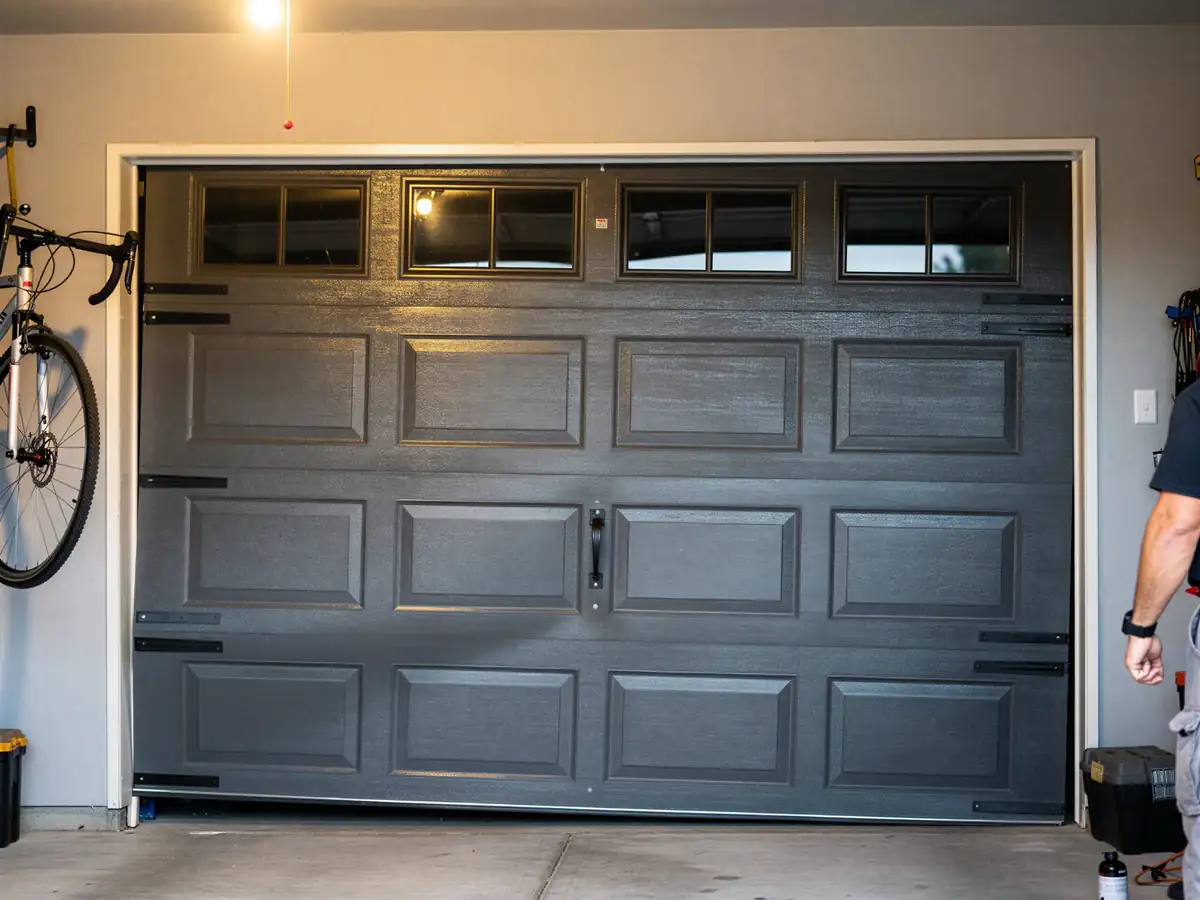
Off-track doesn't always mean the fix is a roller and a bent track. Wellington's median household income runs well above the service area's overall figure - $110,294 compared with $92,382 across the territory - and that tends to show up in how many of these doors already carry an upgraded opener bolted onto the original mid-90s track. A newer opener forcing an old, slightly warped track can mask the real problem: the door looks like it's fighting the opener when it's actually fighting bent rail. We also run into doors where a previous DIY tightening job pulled a track bracket to the wrong angle, which looks fine until the door's halfway up and the roller finds the gap. On a two-car door, one side coming off track usually means the other side is close behind - the cable or spring on that side is carrying weight it wasn't built for anymore. None of this is visible from the driveway. It takes taking the door off its travel limits and running it by hand to feel exactly where it binds.
The DIY Question
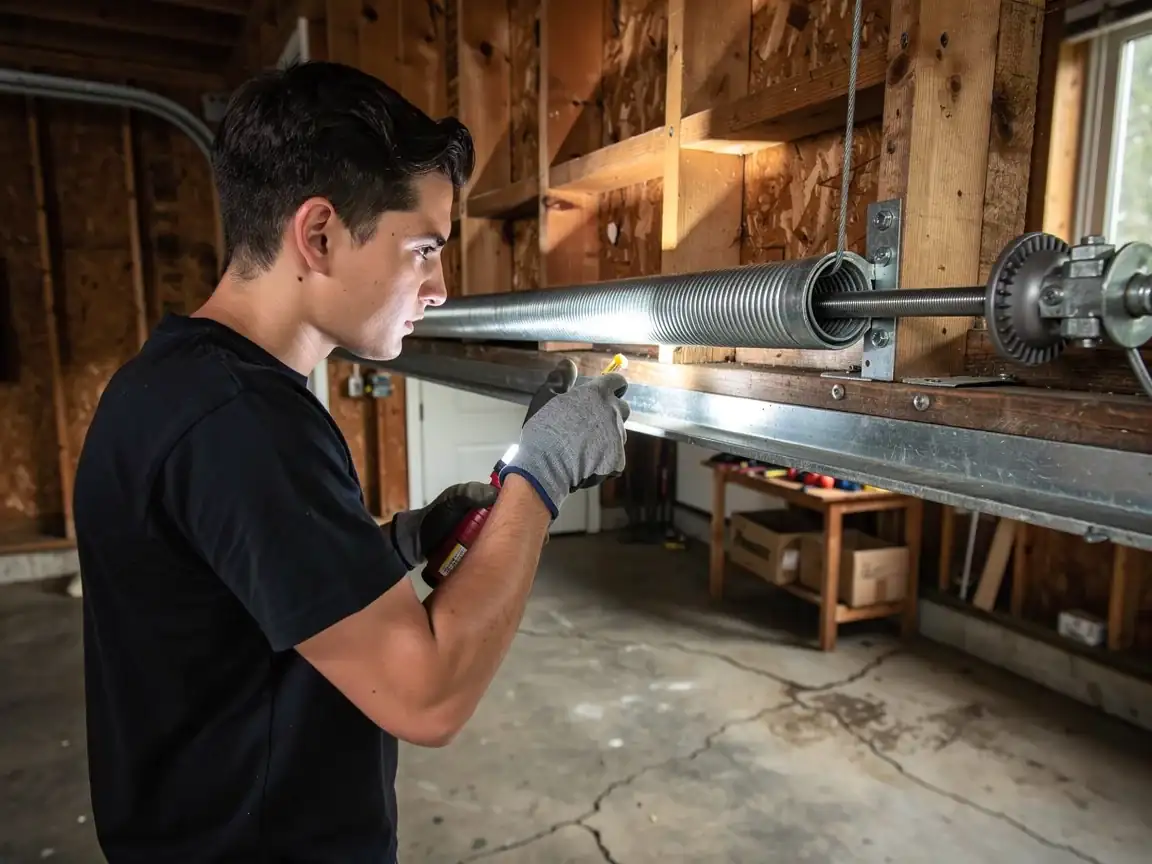
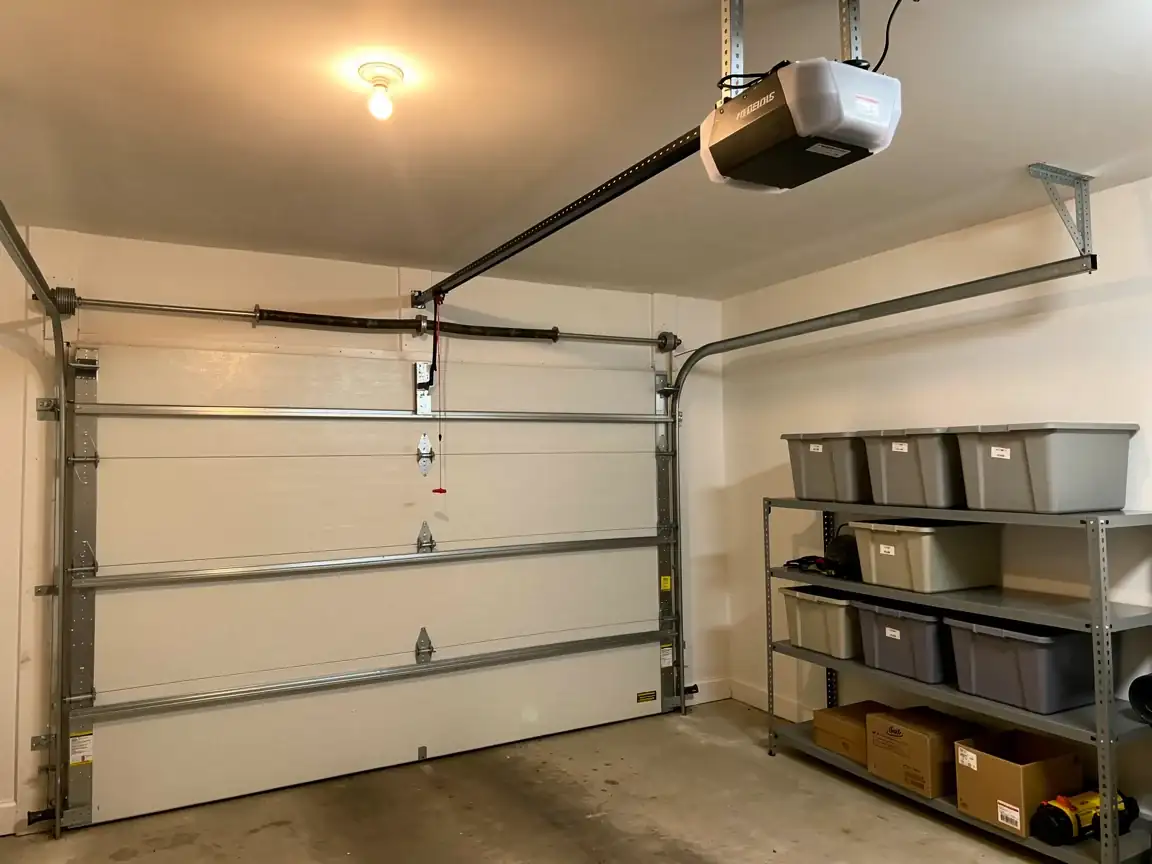
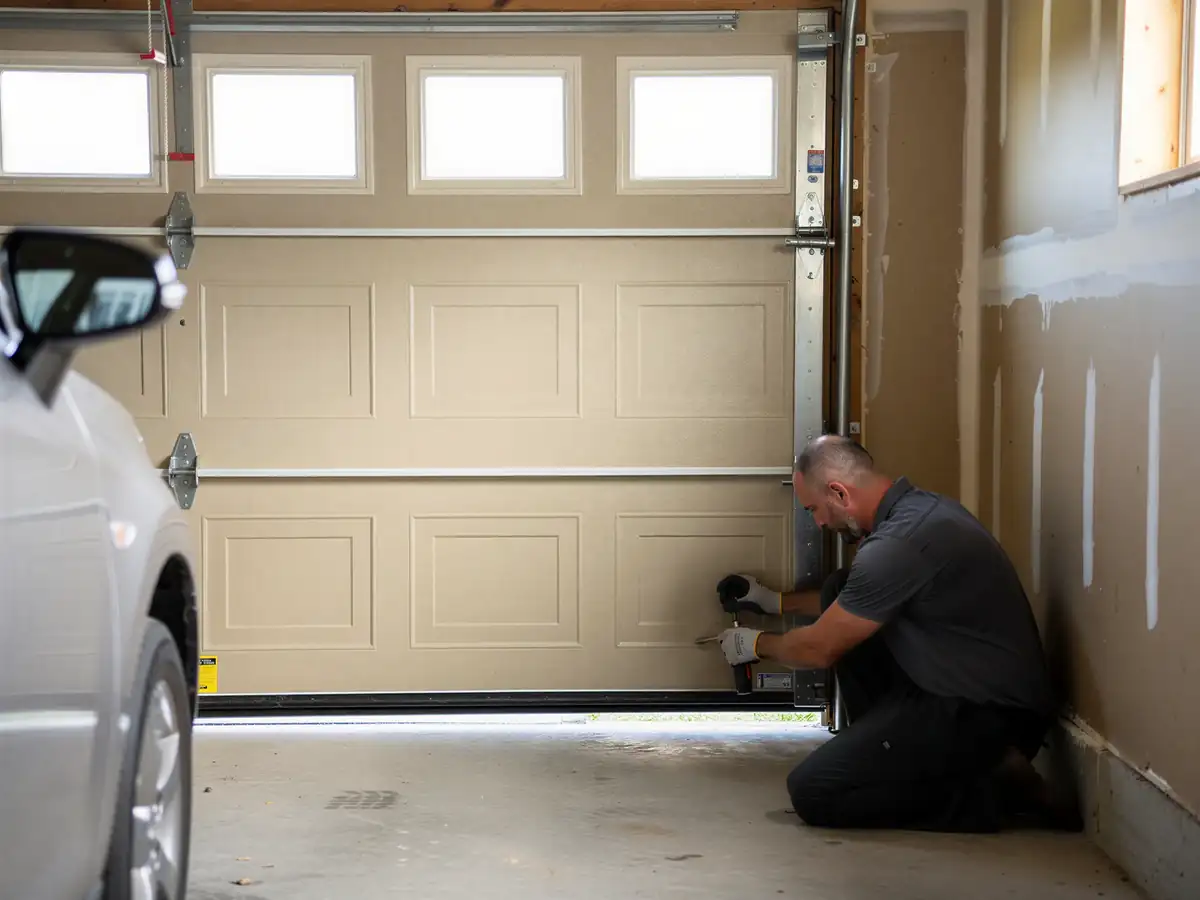
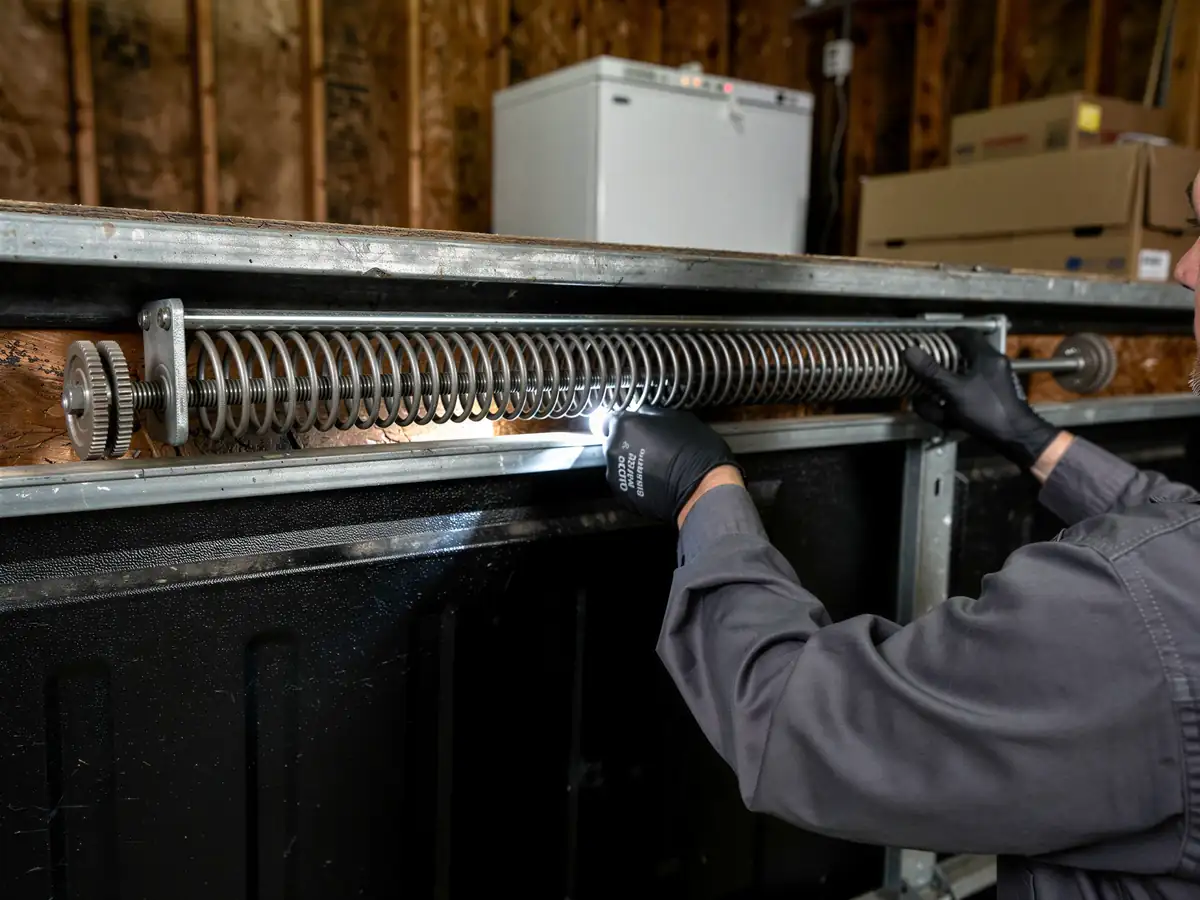
Lifting a door back onto its track when the spring is still under tension is where people get hurt - a torsion spring can put several hundred pounds of pull through a drum, and an extension spring under full stretch isn't much gentler. We'd rather you call than have someone's hand, or a car, in the way when a cable lets go. That said, there are a few things worth checking before you pick up the phone: look for an obvious bent track section, listen for grinding that stops the instant you hit the wall button, and check whether the manual release cord has been pulled - sometimes that's the whole problem. What we won't do is talk you through resetting a door that's under spring tension over the phone, and we won't pretend every off-track call is a simple fifteen-minute fix. Some are. Some mean a track section, a roller set, and an hour of adjustment. We'll tell you which one it is once we've looked, not before.
Parts We Carry
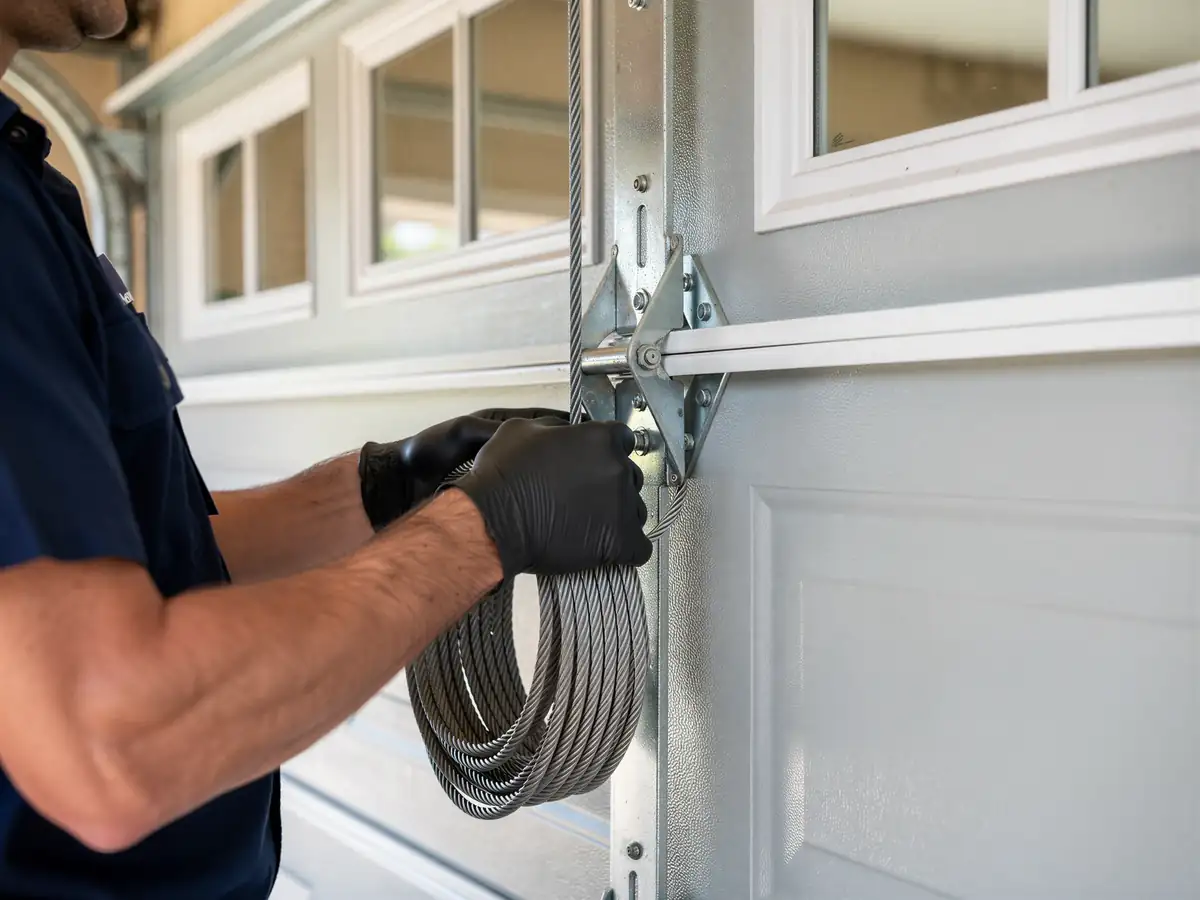
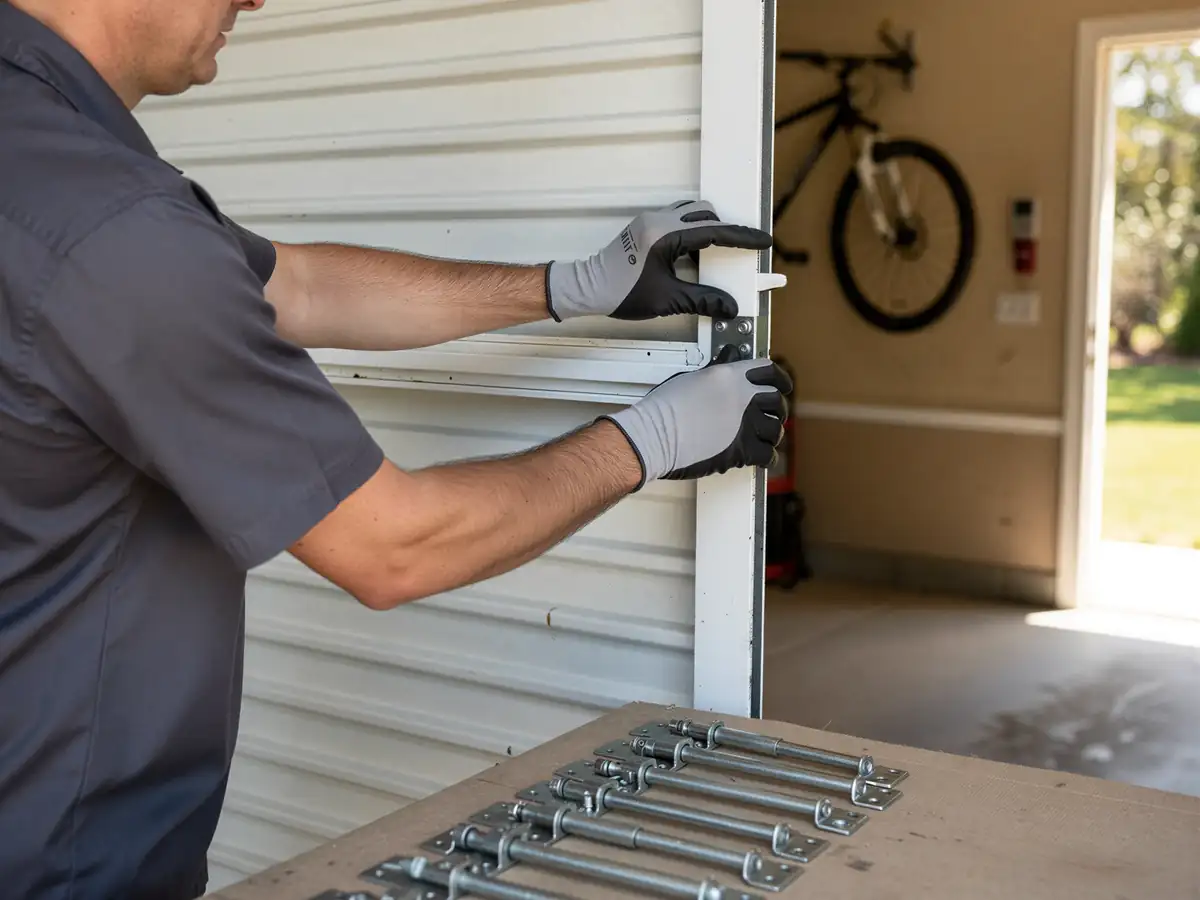
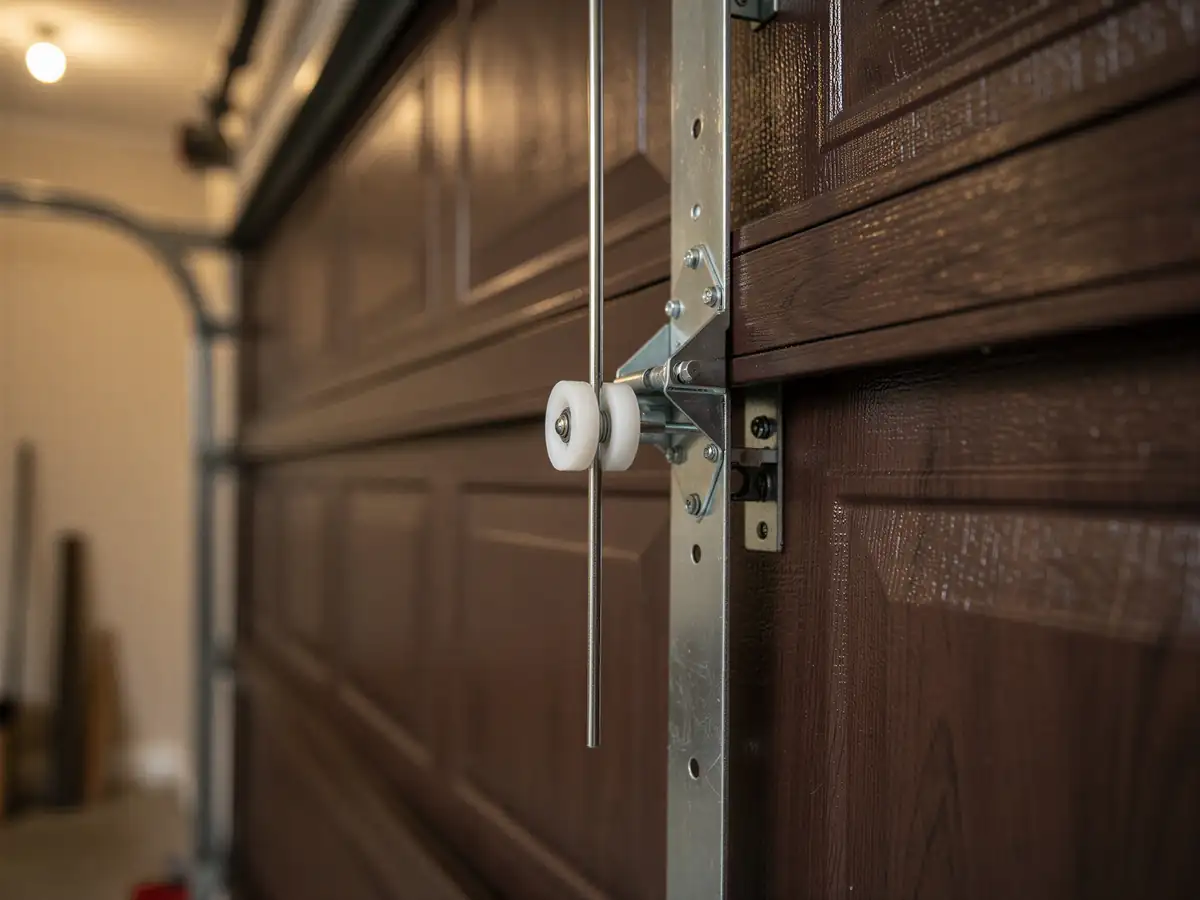
Because most Wellington doors we see are running mid-90s extension-spring hardware, the truck carries what that setup actually needs: nylon and steel rollers in the sizes that fit 1990s track gauge, short and long sections of galvanized roll-formed track, idler pulleys, cable clips, and the brackets that hold track to the jamb. We don't stock every torsion-spring part on the truck for every call, since torsion setups are less common on houses built this late in the service area's build-out - if a job turns out to need one, we carry what's standard and order anything unusual rather than guess. What we don't carry is replacement panels or full door sections; those are made to match a specific door's design and color, and ordering one on the spot without seeing it against the house risks a mismatch that's worse than the dent it's replacing. For everything that moves the door - rollers, track, pulleys, cable - we're stocked for same-visit work on the hardware this part of the service area actually has.