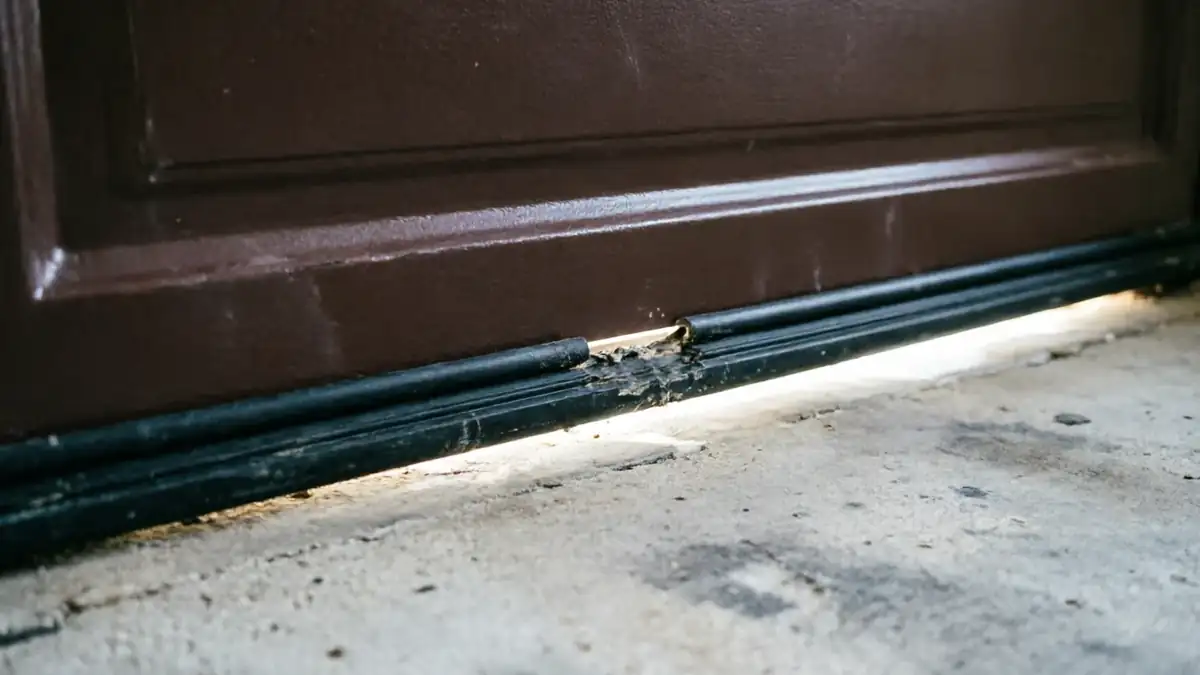
What to Check
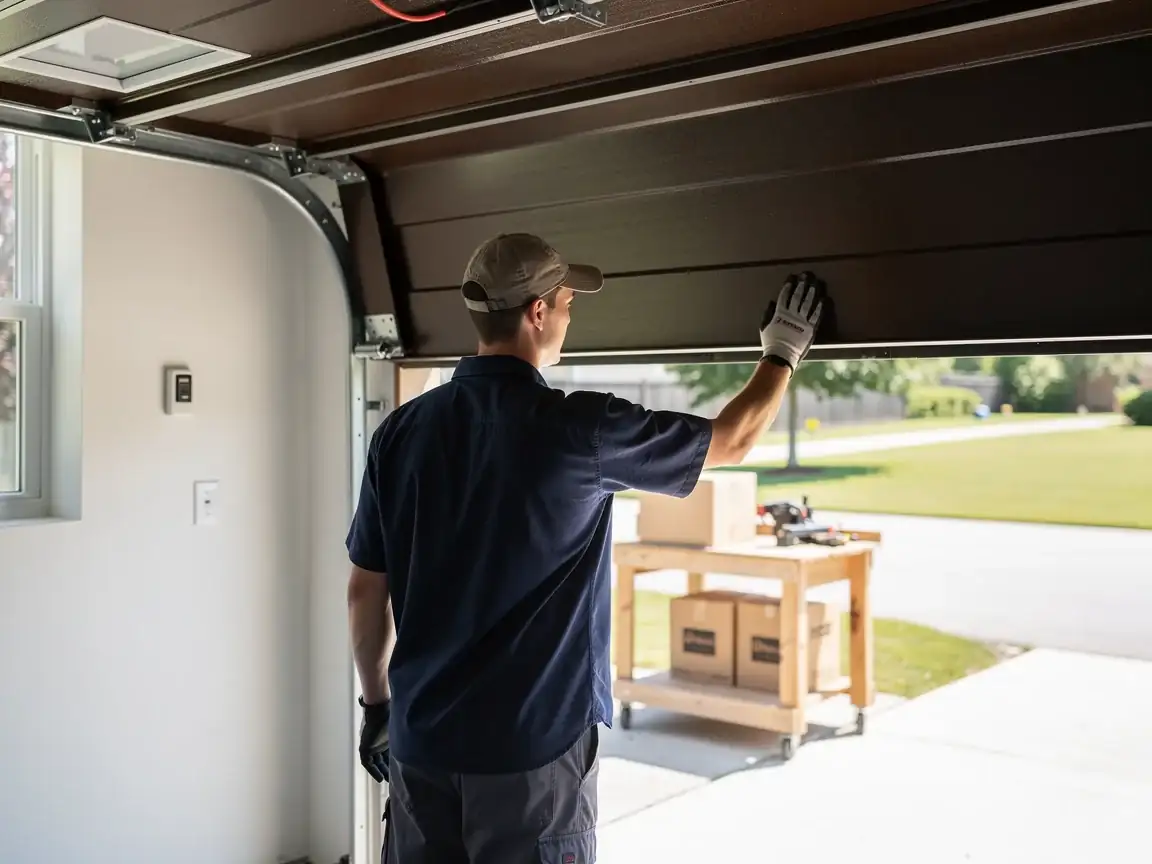
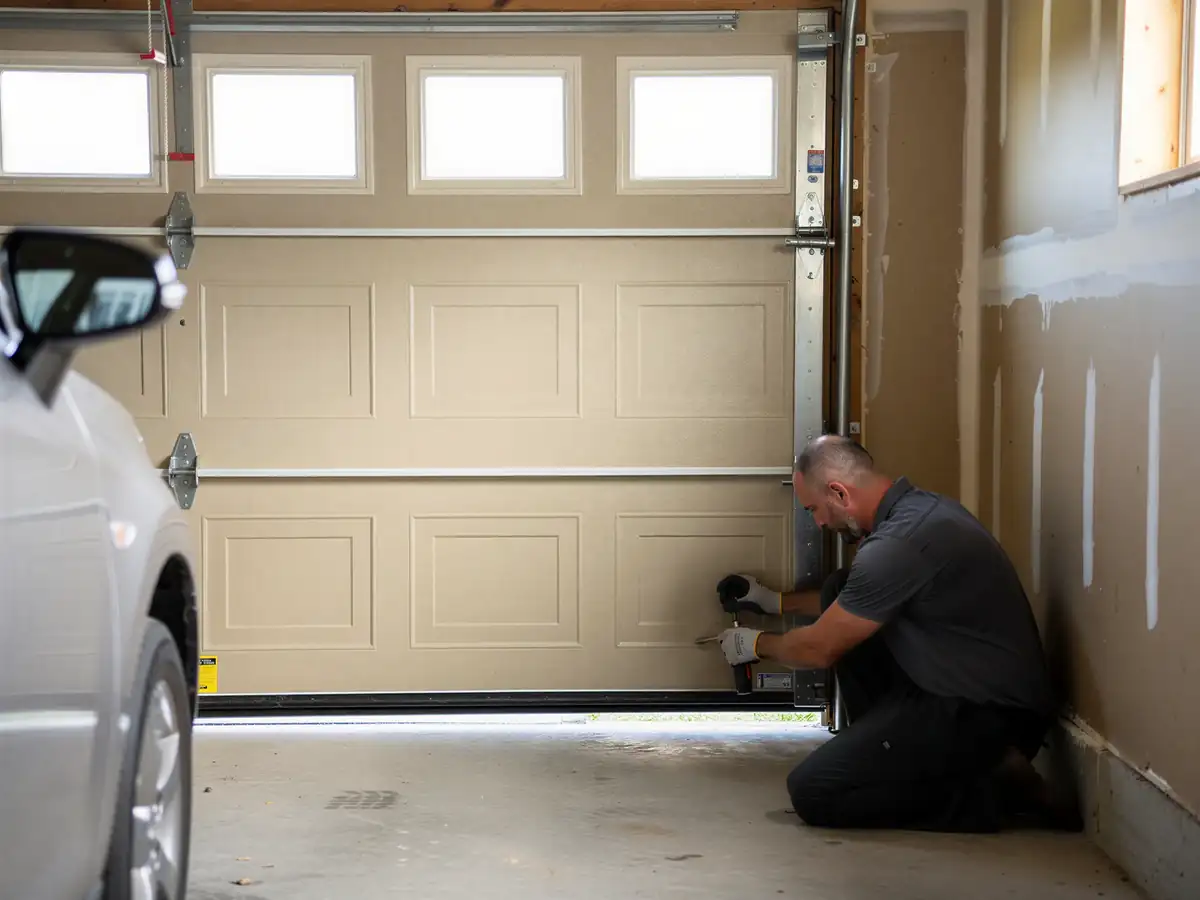
Walk the door on a bright afternoon and look for daylight at the bottom seal, the two side seals, and the header at the top
West Palm Beach housing stock runs from 1965 to 2021, with the median build year landing around 1978 - so a lot of the doors on this side of town are still wearing the rubber that shipped with a 1970s build, or a cheap replacement that went in once and was never touched again.
Run a hand along the bottom astragal
If it's stiff instead of pliable, or flattened on one side, it's past useful life. Check the side seals for shrinkage - rubber that's pulled away from the jamb instead of sitting flush against it. Look at the top seal for a visible gap when the door is down. Check the slab itself for window gasket wear if your panel has lites.
Also check the concrete threshold
Over fifty-plus years, slabs settle unevenly, and a gap that wasn't there when the house was new shows up as a thin strip of daylight under the door even with good seals. That's a threshold problem, not a seal problem, and swapping the rubber won't fix it.
The Situation
Most of the houses in this part of the county were built in the 1960s and 70s, and that's true across the 21 communities this shop covers - Westgate, Riviera Beach, Lake Park, Palm Beach Shores, Palm Beach, North Palm Beach, Royal Palm Beach, Palm Springs, Greenacres, Loxahatchee Groves, Lake Worth Beach, Juno Beach, Atlantis, Westlake, Wellington, Lantana, Manalapan, Tequesta, Ocean Ridge, Golf, and Jupiter Island. Same era, same doors, same seal problem showing up on the same schedule.
Across the roughly 46,915 owner-occupied houses in this service area, seal wear tracks with build decade more than with any particular street. A door installed when the house went up in 1968 is a different animal than one on a house finished in 2005, even if both sit a mile apart. The newer stock holds its seals longer; the older stock is due.
With median household income here at $92,382, plenty of owners skip the patch-and-wait approach and just replace the full seal set, sometimes the whole bottom astragal track, in one visit rather than coming back twice for the same draught.
Leaving It Alone
A draught under the door doesn't sound like much. In practice it lets in water during heavy rain, gives ants and small lizards a way in, and runs your garage AC harder if the space is conditioned at all. None of that is dramatic on day one. It adds up over a few wet seasons.
Here's the honest limitation: a worn seal is a cheap, quick fix. A warped track, a settled threshold, or a panel that's bowed from age is not - and no amount of new rubber solves those. If the gap is uneven side to side, or the door doesn't sit flat when it's down, the seal isn't the actual problem, and selling you three seals in a row to find that out wastes your money. Worth knowing before you call anyone, this shop included.
Left long enough, a bad seal also invites moisture into the bottom panel itself, particularly on the steel doors common in this housing stock. Once that starts, you're not looking at a seal job anymore - you're looking at panel replacement, which costs a lot more than the rubber did.
What the Weather Here Does to It
West Palm Beach sits in a mild, temperate band
No hard freezes, no winter that cracks rubber from cold. That sounds like an easy ride for a garage door seal, and in one sense it is: you're not fighting the same seal failures a cold-climate house deals with.
But mild doesn't mean dry
Year-round humidity works on rubber seals constantly rather than in one hard season, softening and then hardening the material in cycles that eventually leave it brittle or gummy depending on the spot. UV plays the same slow game on anything facing west or south most of the day. Neither shows up as a dramatic failure - it's a gradual one, which is exactly why owners here tend to notice the draught before they notice the seal looking obviously bad.
That's the pattern worth remembering: in this climate, a seal rarely fails all at once
It just gets a little less flush every year until one day there's a strip of daylight under the door that wasn't there last summer.