The Cost of This Job
We can't quote a number here without knowing which part failed and how bad the damage is
So we won't pretend otherwise. A door that jumped track because one roller snapped is a different job than a door that's been dragged on a bent track for a week, which can crease panels and bend the opener's drive carriage. What we can tell you is what drives the price up or down on this call: how many sections of track need swapping, whether the cable came off the drum too, and whether the opener's travel limits need resetting once the door runs straight again.
Across the service area we work in
46,915 owner-occupied houses and a median household income of $92,382 - most of these calls land in the same range because most of the housing stock shares the same era of hardware. That's not a guarantee of price, it's just context: a 1978-built door track is usually a simpler fix than a custom or oversized door, and we'll tell you on site which one you've got before any work starts.
- 46,915 owner-occupied
- $92,382 median household income
One honest limit: if the track is salvageable we'll say so and charge for the repair
Not a full replacement. If the door panel itself is bent beyond straightening, replacing the section costs less in the long run than a repeated re-track.
Parts We Carry
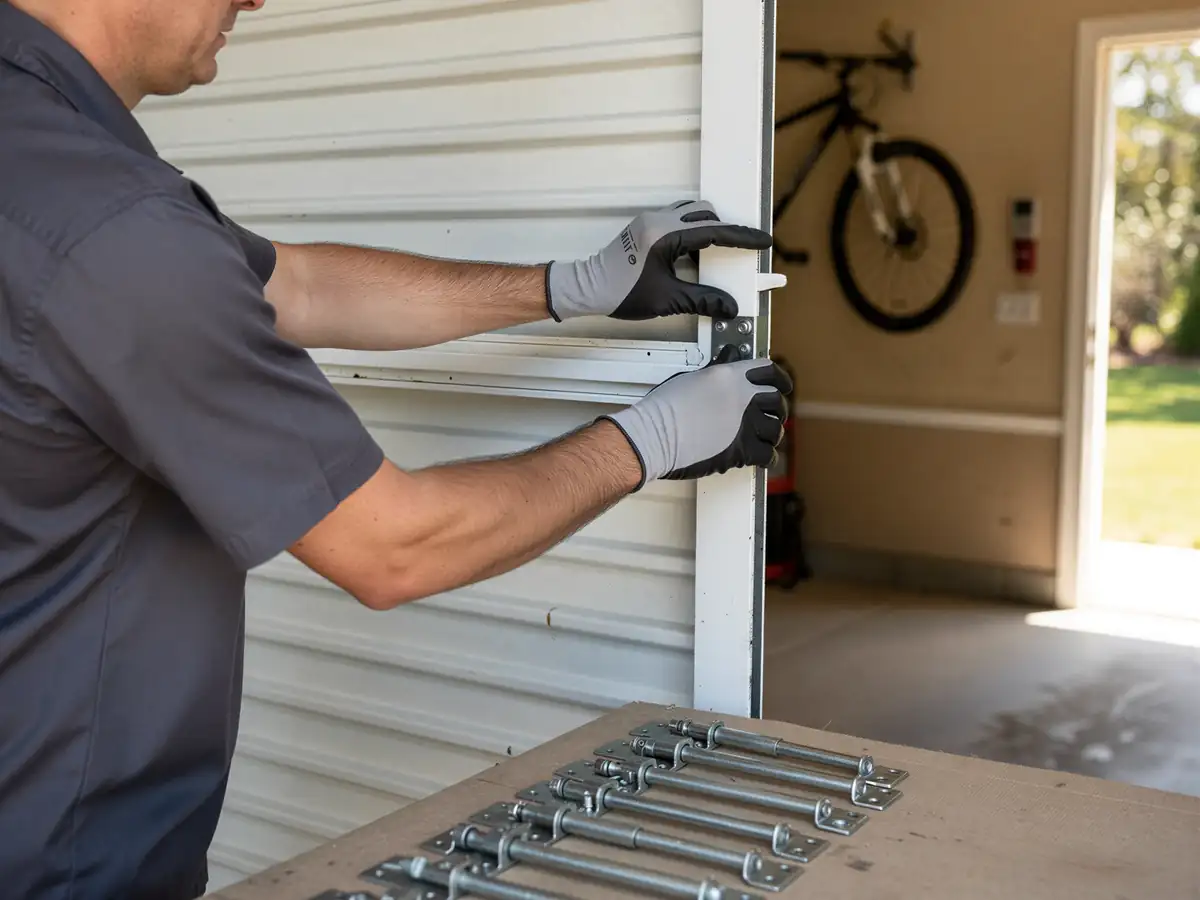
We keep stock sized for the hardware that's actually on the road here - galvanized track sections in the standard widths used on 1960s-70s single and double doors, nylon and steel rollers in both 2-inch and 4-inch stem lengths, and replacement roller brackets for the sheet-metal jambs common on homes built through the 1970s and 80s. We also carry the lift cables and drums that pair with that era's torsion and extension spring setups, since a door that's off track has often also stripped a cable or bent a drum on the way down.
What we don't stock on the truck: specialty track for custom or oversized doors, and odd-width panels for doors no longer in production. Those get ordered, and we'll tell you the lead time before you commit to the repair rather than after.
Because so much of the housing across this area - from the older sections near Westgate out toward the newer construction near Westlake and Royal Palm Beach - still runs original steel track on side-mounted hardware, carrying that stock as rolling inventory instead of special-ordering it on every call is what keeps this specific repair fast.
How It Shows Up
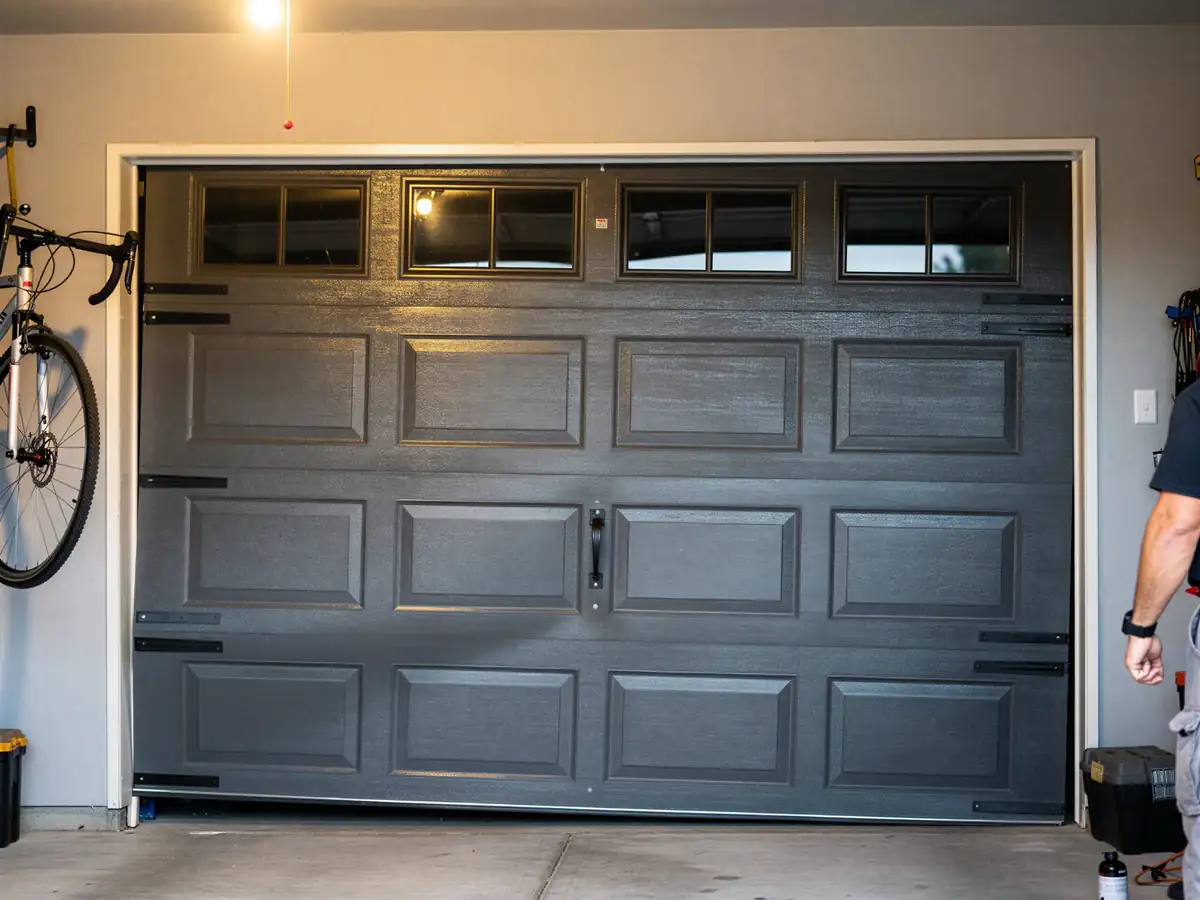
The door usually doesn't come all the way down. It stalls a few inches up, or it comes down crooked with one side lower than the other. Sometimes you'll hear a bang partway through the cycle, which is the roller popping out of the track rather than riding through it. Other times it's quieter - the door just stops responding to the opener because the safety sensors read the misalignment as an obstruction and refuse to close.
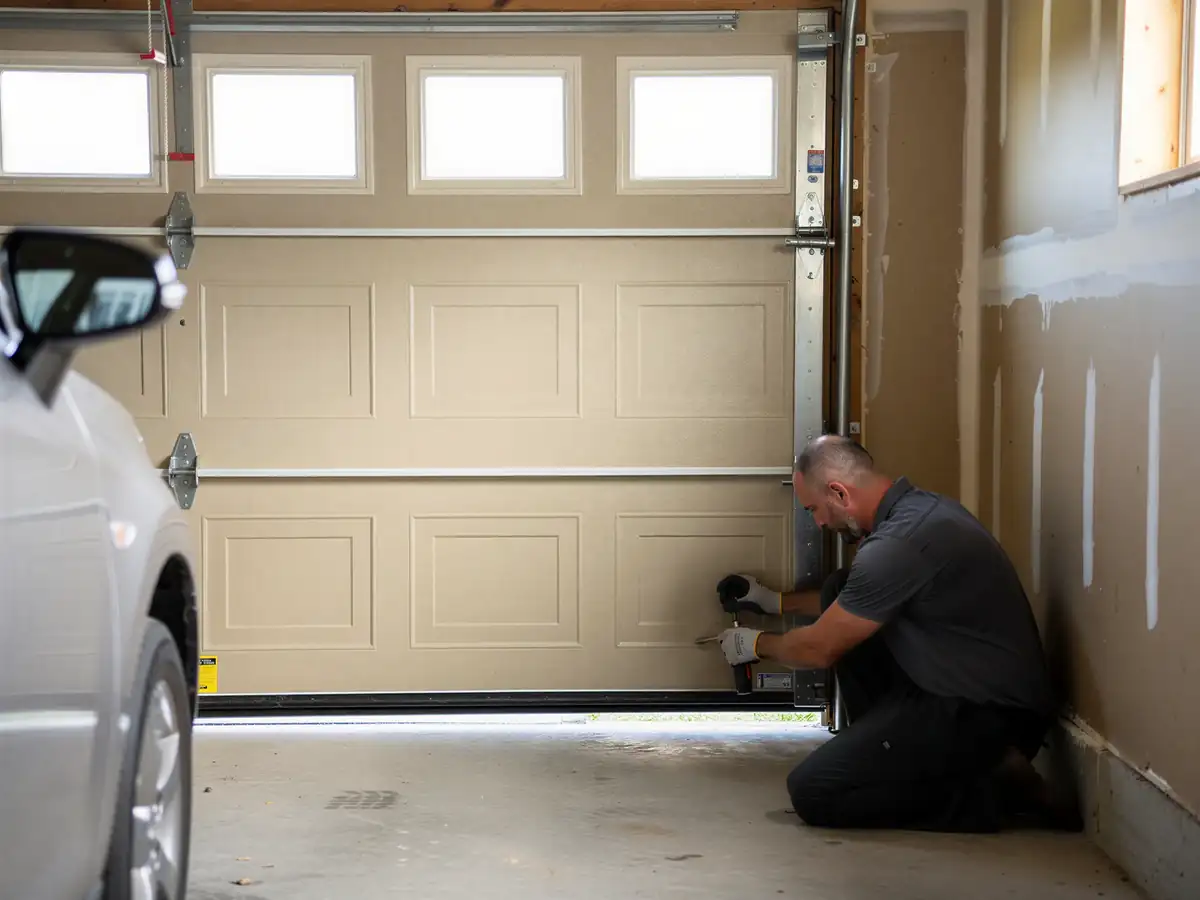
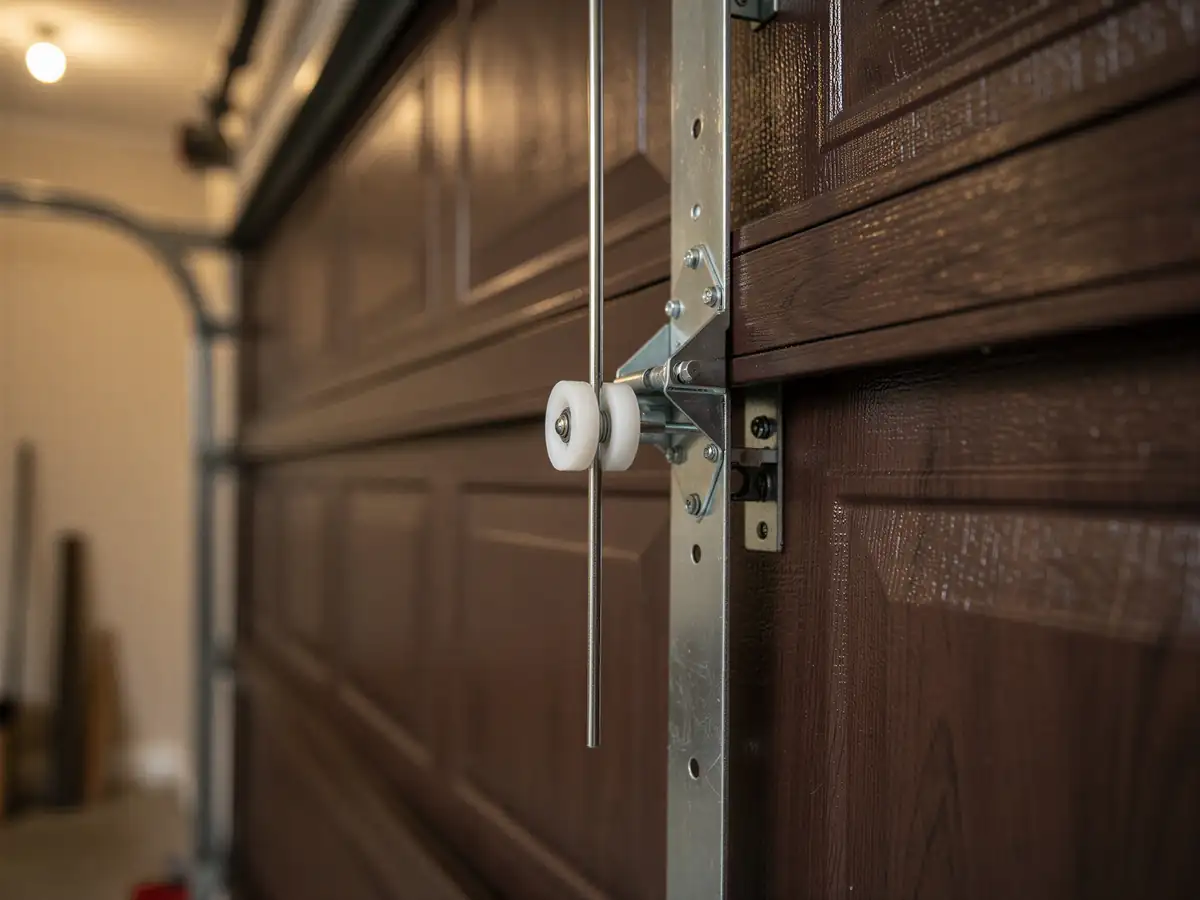
Look at the track itself from inside the garage. A gap between the roller and the rail, a visible bend in the aluminum or steel channel, or a bracket pulled away from the wood jamb are all signs the door has already left its intended path. If you force the opener to keep trying, you risk bending the track further or pulling the bracket screws out of jambs that, on a lot of the area's 1960s and 70s-built garages, are original lumber and don't take a second set of screws well.
Don't keep hitting the opener button once you see the door hanging crooked. Each cycle adds stress to a track that's already out of alignment and can turn a bracket repair into a full track and panel replacement.
What Causes It Around Here
Most houses across this service area were built between 1965 and 2021
With the median landing around 1978, and that matters directly for this failure. A door's track has to stay bolted to jamb brackets that, on 1960s and 70s construction, were set with hardware sized for lighter, single-layer wood doors - not the heavier insulated steel doors most homeowners have since installed on the same frame. That mismatch is one of the more common reasons a roller walks off the rail over time: the bracket flexes slightly every cycle until it's enough to throw the door off line.
The mild temperate climate here plays a role too
Wood jambs and door frames across the 21 named communities we serve swell and shrink gently with humidity rather than through hard freeze-thaw cycles, but that slow seasonal movement still loosens bracket screws and shifts track alignment by fractions of an inch at a time - small enough to miss until the roller finally pops free.
Age of the opener is the other factor
A door that's run on the same track for decades accumulates wear unevenly - one roller wears faster than its opposite number, pulling the door slightly off square every time it cycles, until one day it doesn't come back on track at all.