What We Actually Check on a West Palm Beach Service Call
A look at what a garage door service call actually checks in West Palm Beach homes built mostly between the 1960s and 1978, and what the mild coastal climate does to the hardware.
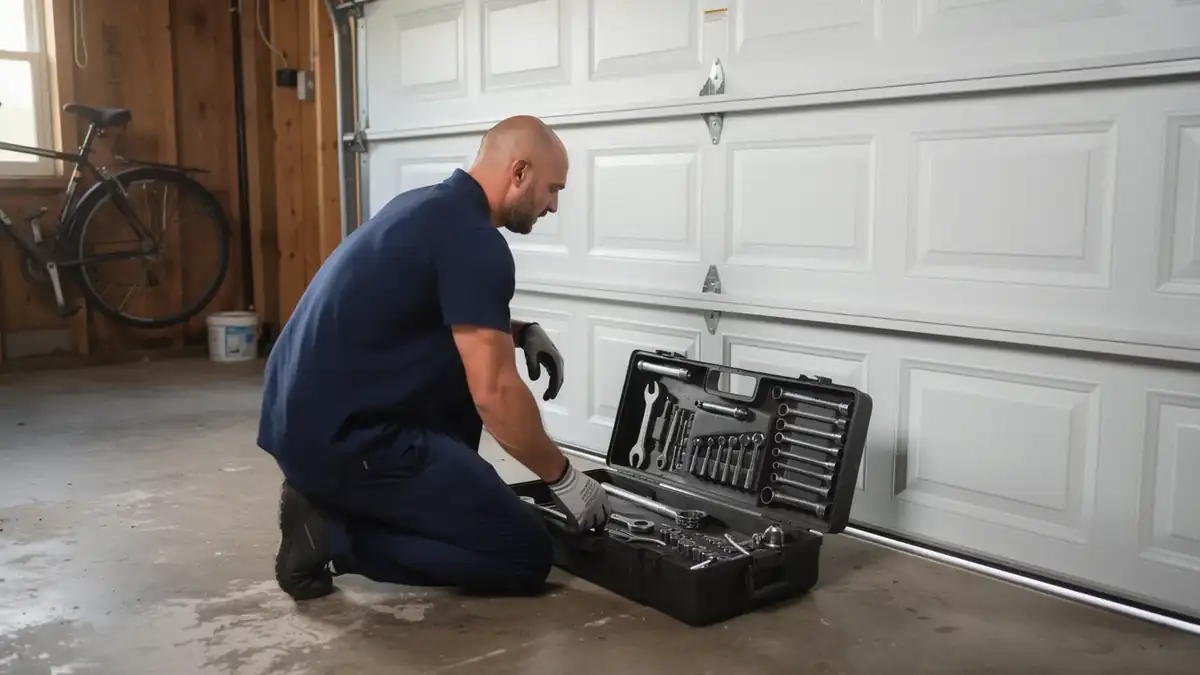
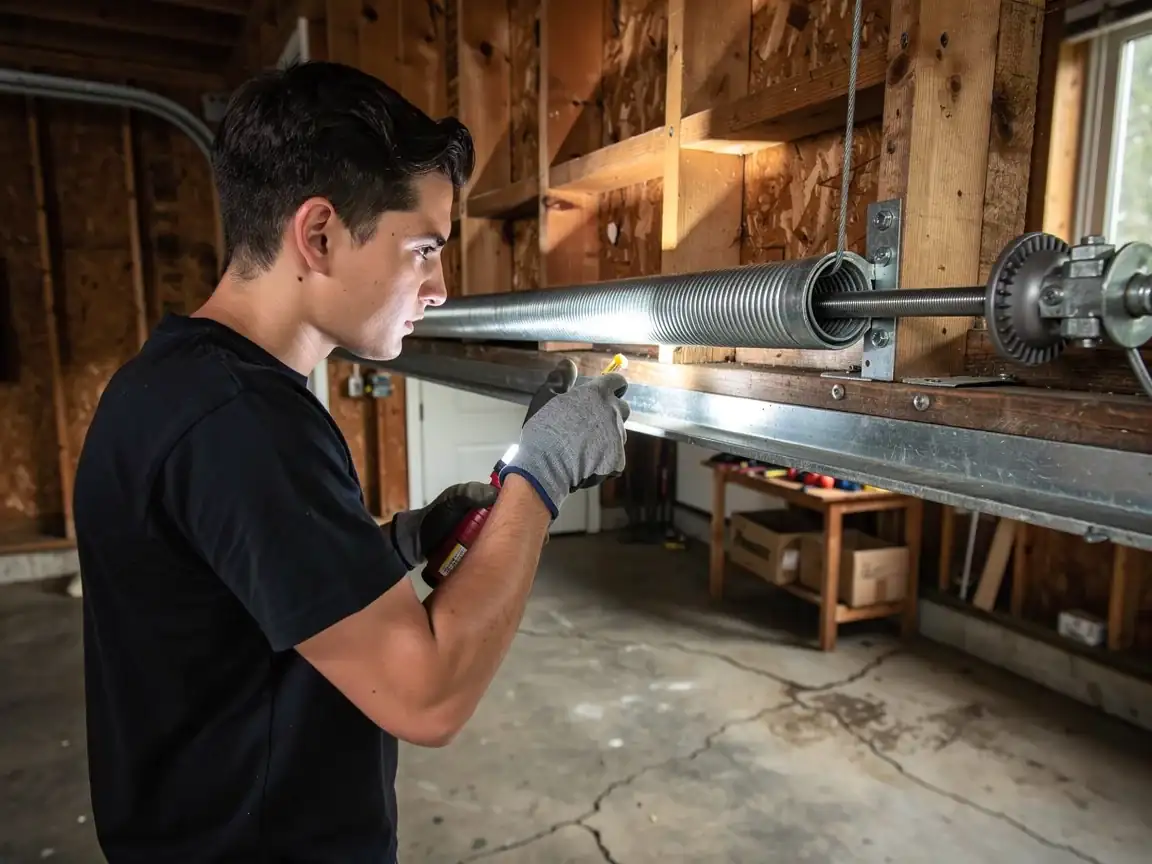
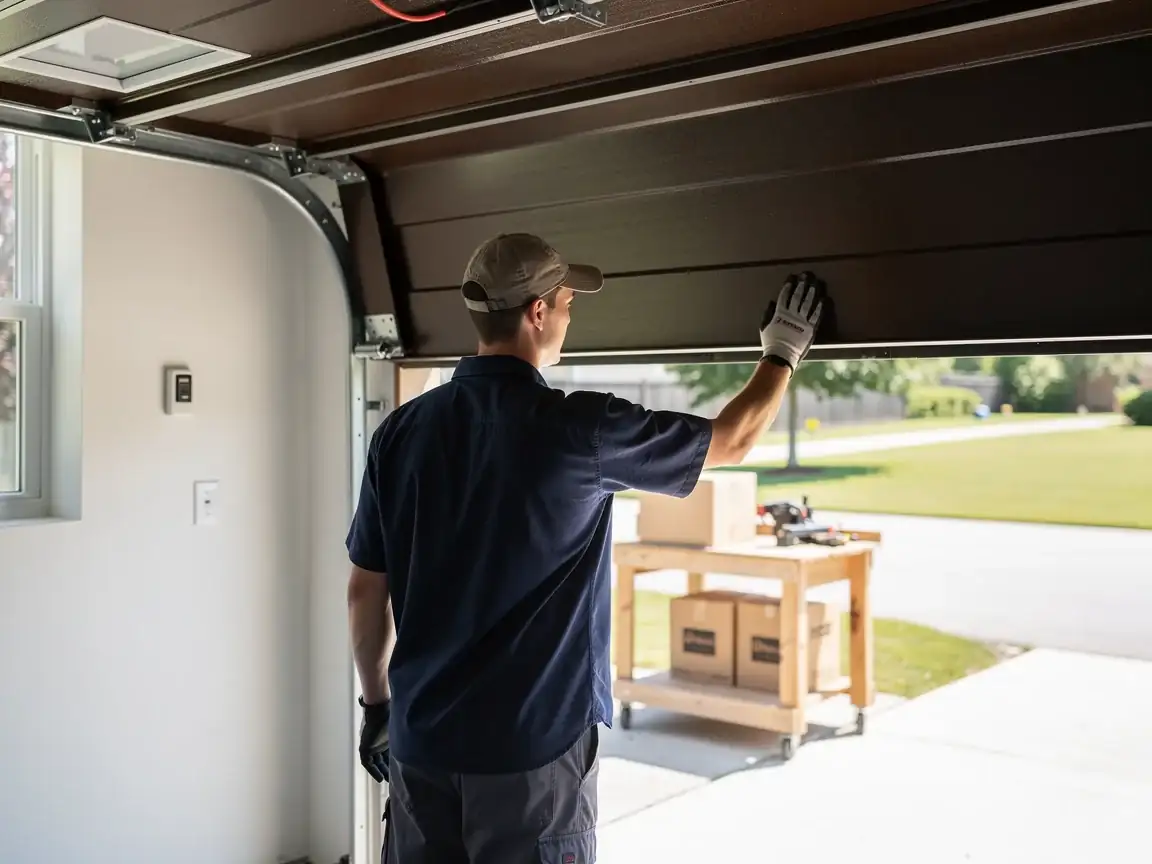
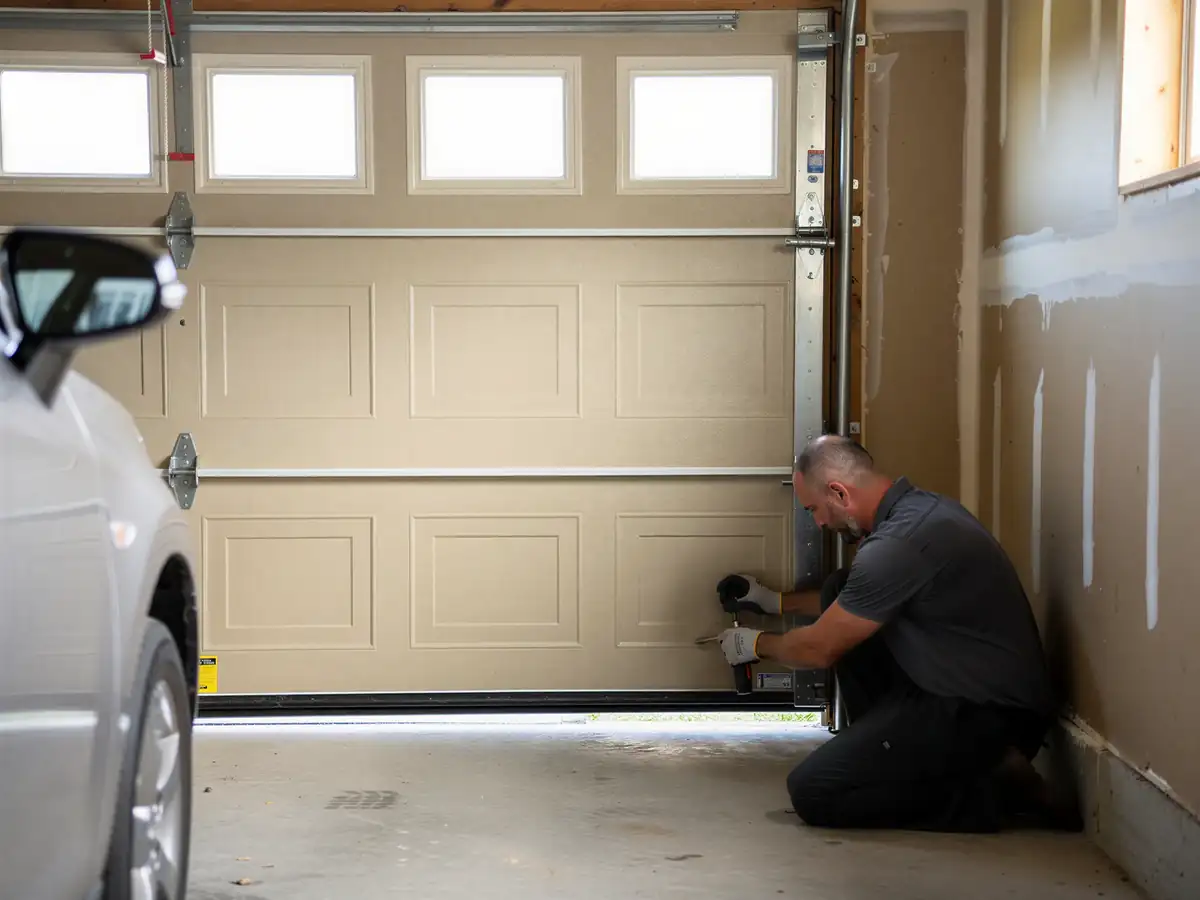
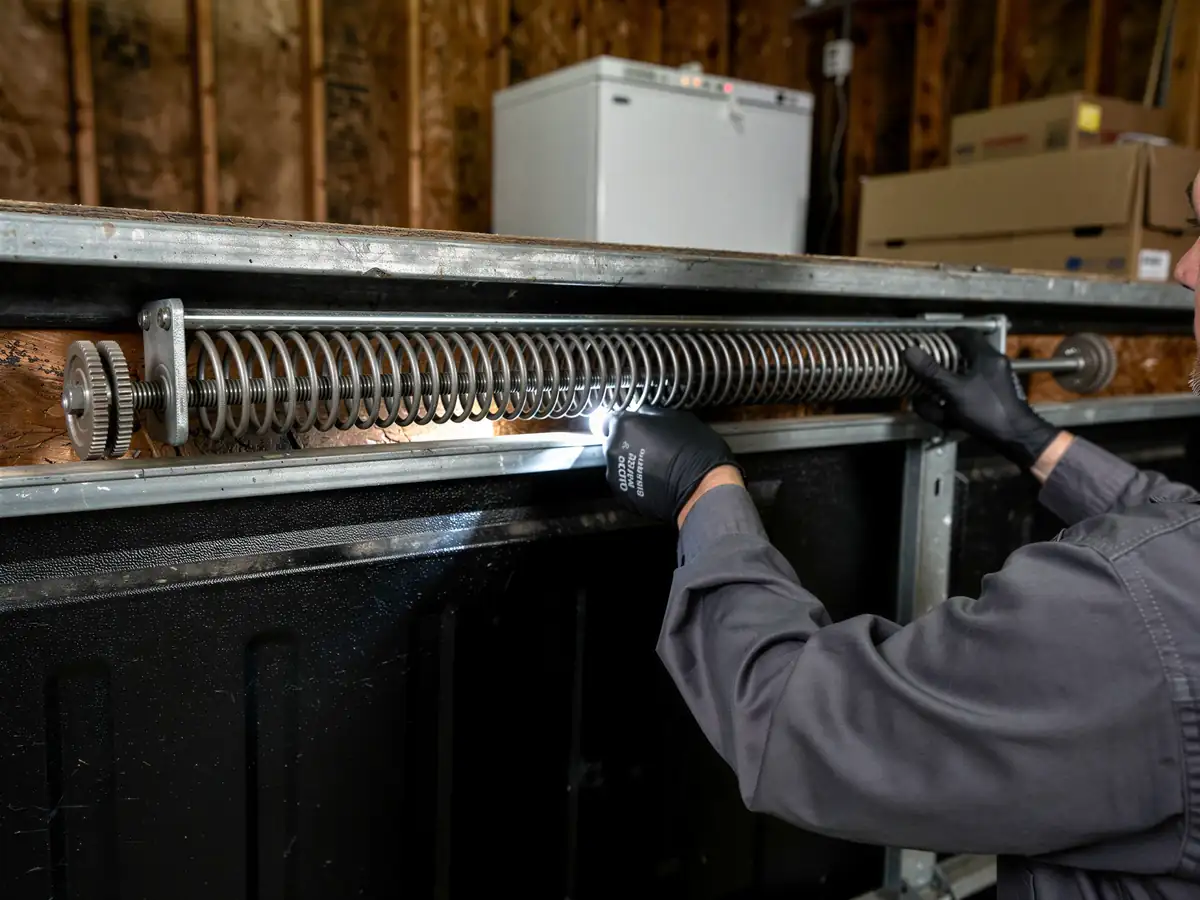
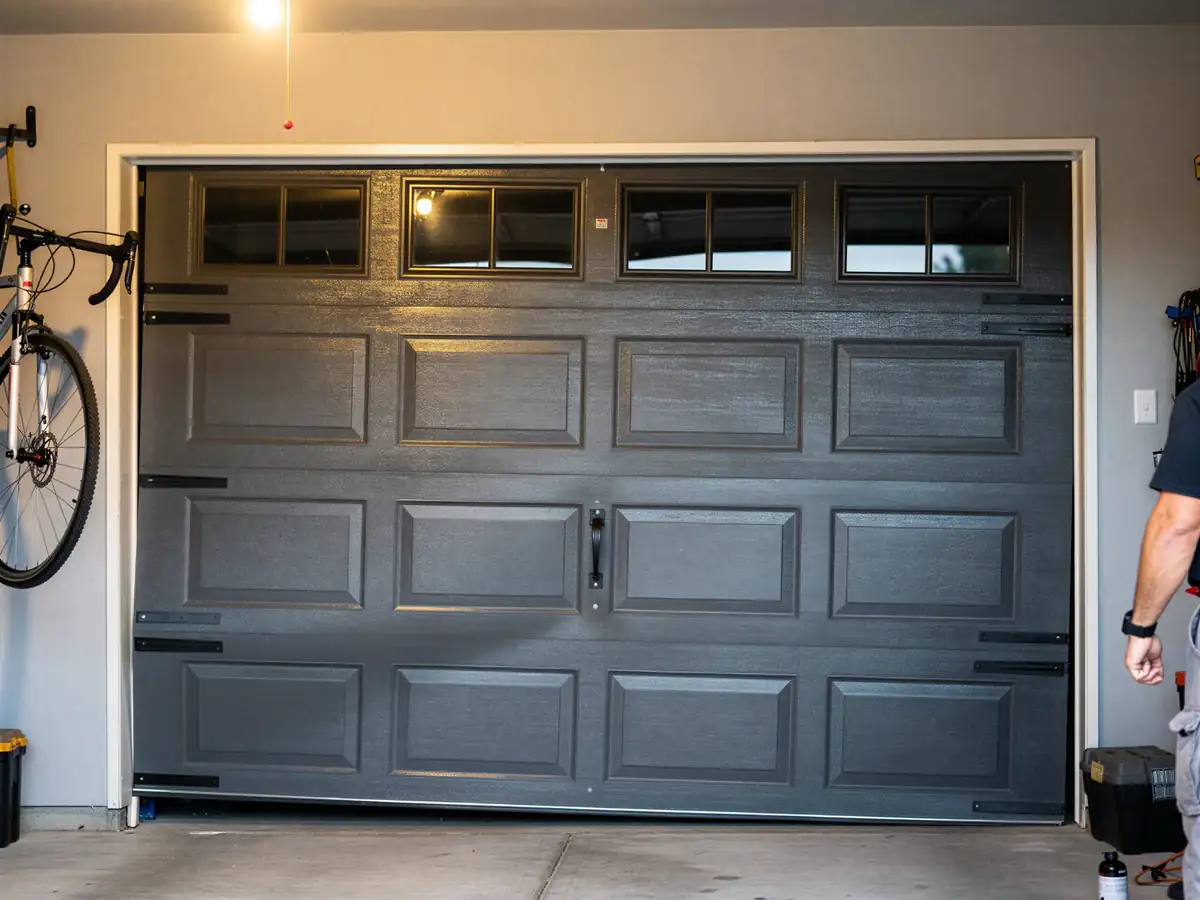
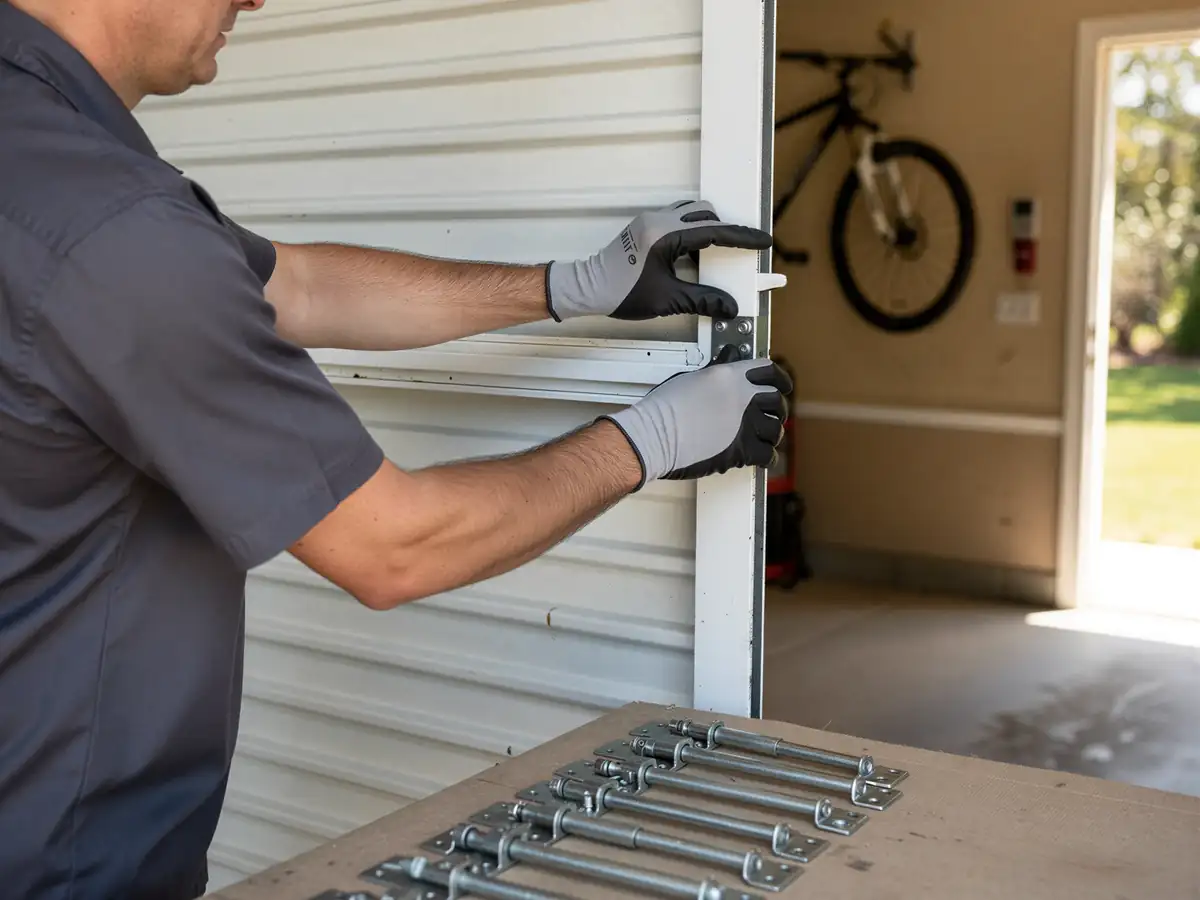
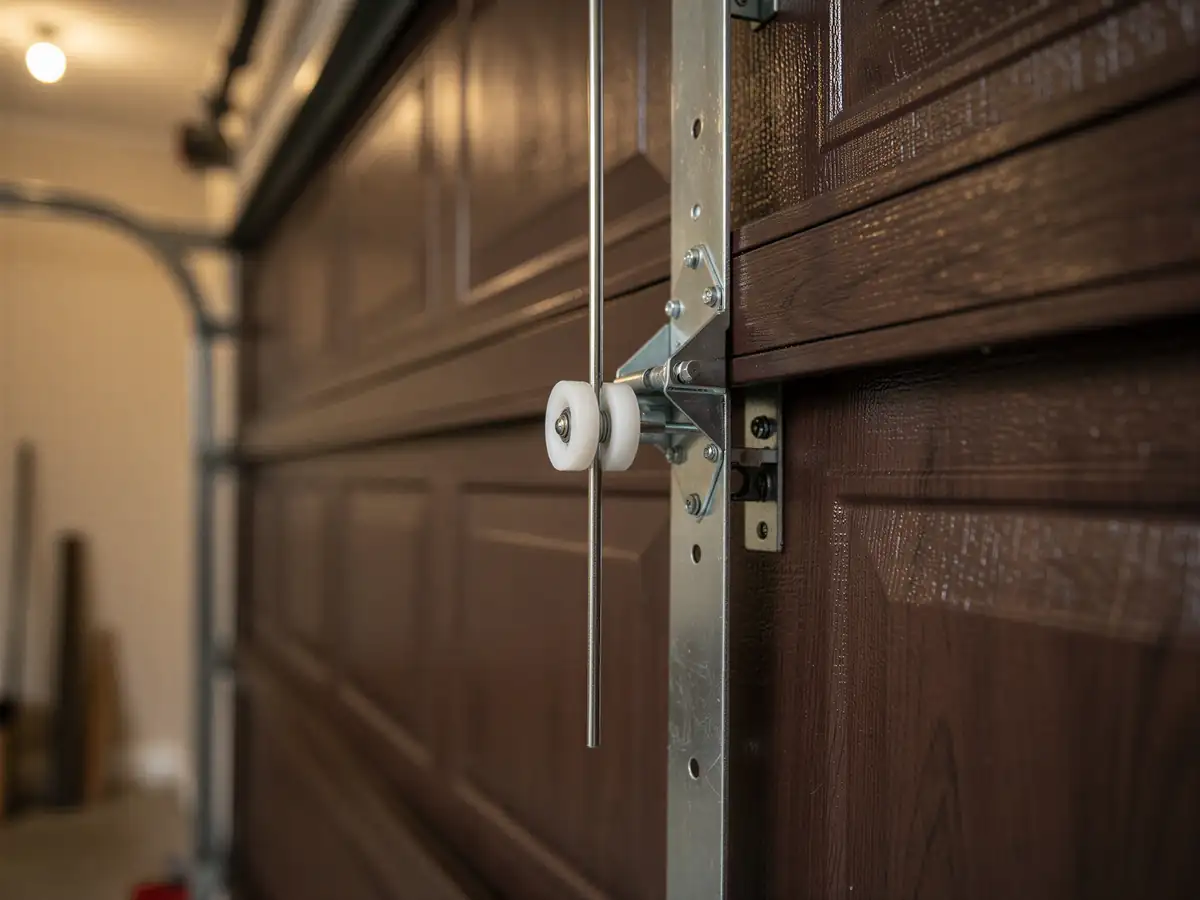
A real service call starts with the track alignment and the spring, not the opener, because the opener is almost never the actual problem. On a double door with a torsion spring, we check the cable drums, the end bearings, and whether the track is still plumb against the jamb. Rollers get a look next - nylon rollers on homes built in the 1965-2021 range (median around 1978, per F1) have usually gone through at least one full replacement cycle by now, sometimes two. We check panel seams for rust streaks at the bottom section, since that's where moisture sits longest. Hinges get tested for play, not just looked at - a hinge that's loose but not broken will still throw the door out of square over a few more months. We also check the force settings on the opener, because a door that's gotten heavier from a failing spring will often still close, just harder, and most owners don't notice until the opener starts straining or reversing. None of this takes long, but skipping any one step means guessing at the actual fault instead of finding it.
The Situation
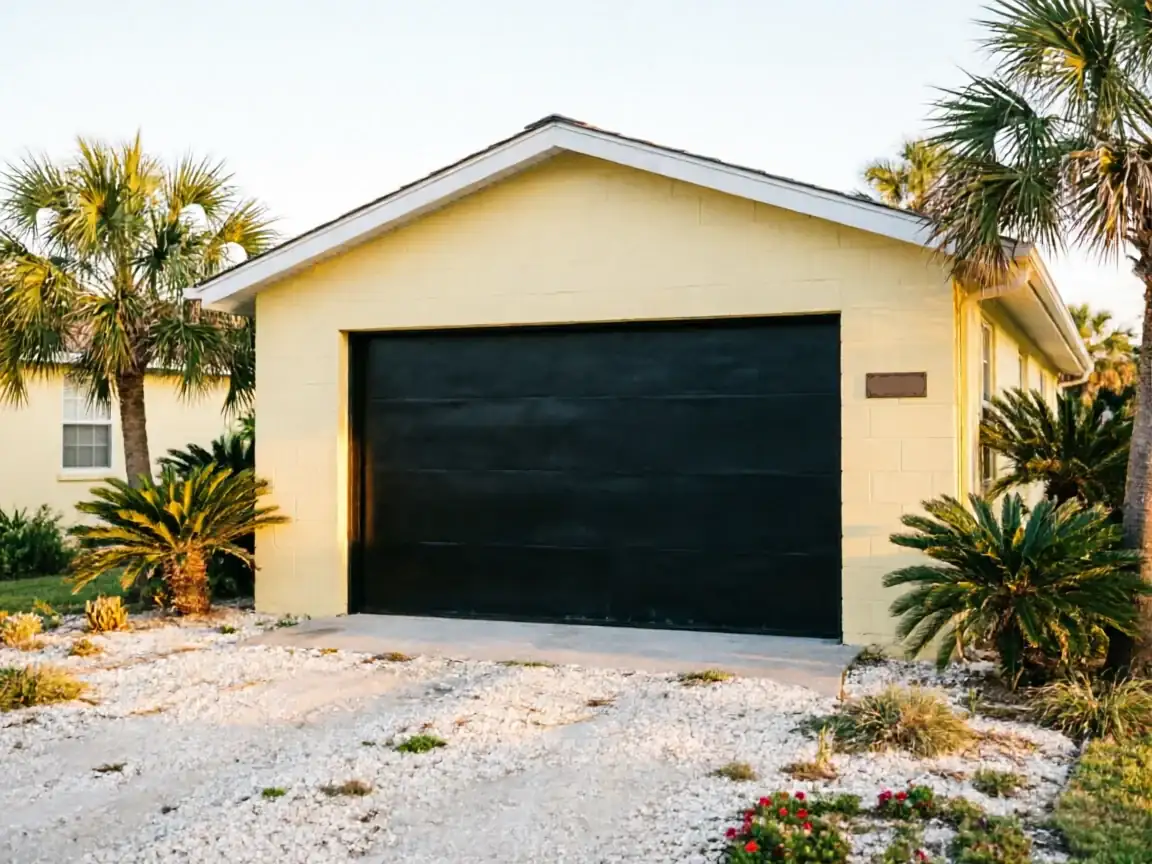
Across the 21 named areas that make up this stretch of the county, housing stock runs heavy toward construction from the 1960s and 70s, with the overall range stretching from 1965 up through 2021 and a median build year around 1978. That spread matters on a service call because a house built in 1968 and one built in 2015 can have completely different track gauges, spring wind direction, and header clearance, even sitting two streets apart. With 46,915 owner-occupied houses across a base of 120,625 households in the service area, and a median household income of $92,382, we see a mix of owners doing straightforward maintenance on an older door and owners replacing a unit outright rather than keep nursing 1970s hardware along. Neither choice is wrong - it depends on what's actually failing and how much of the original hardware is still under the door.
Leaving It Alone
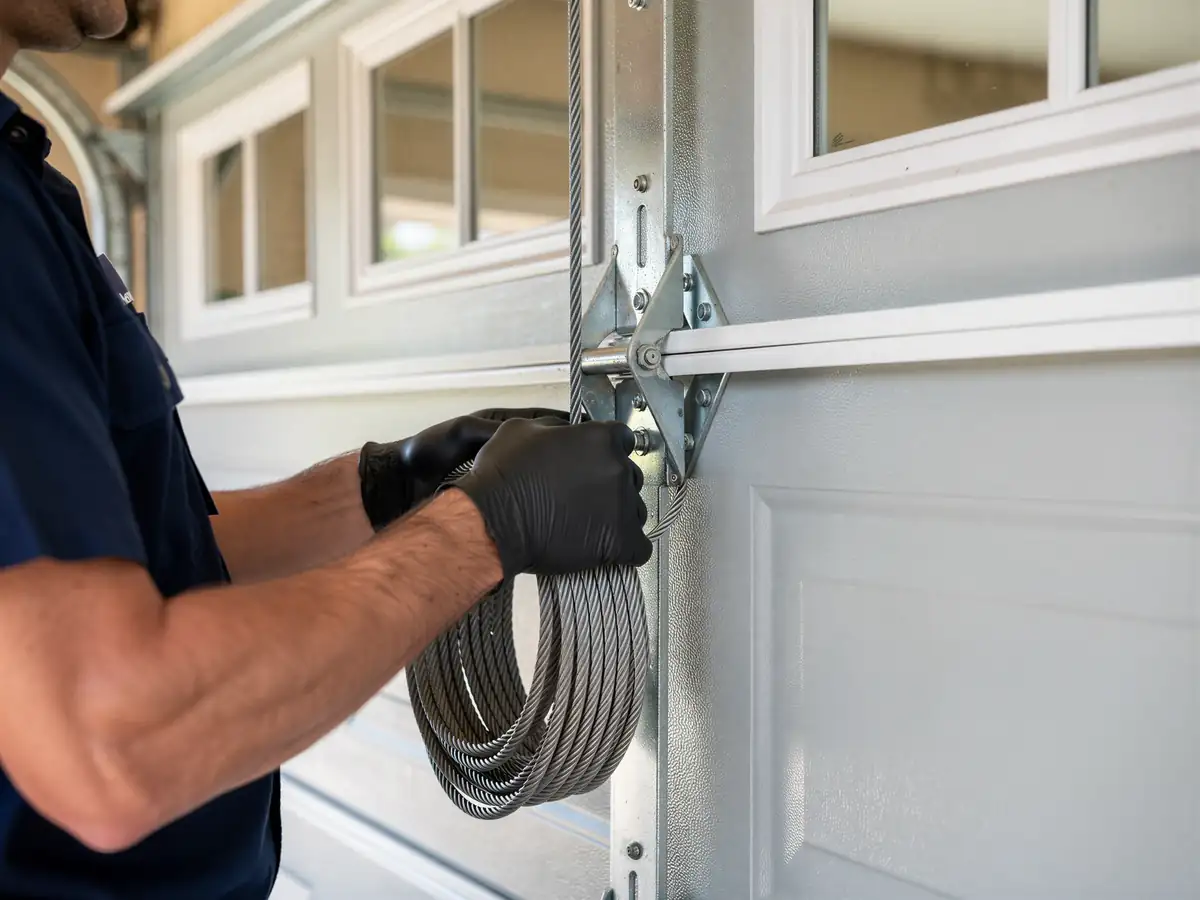
Here's the honest limitation: if a torsion spring is original to a house built in the 1960s or 70s, we are not going to tell you it just needs a tune-up. Springs have a cycle life, and a spring that old has usually outlived it regardless of how clean it looks. Same with galvanized cable on an older drum - once it's showing broken strands, patching it is a short-term fix at best, and we'd rather say that up front than charge for a repair we know won't hold. On the other hand, a door with a dented panel but sound springs, tracks, and rollers doesn't need replacing just because it's cosmetically rough. We'd rather talk you out of a job that doesn't make sense than sell you one.
What the Weather Here Does to It
The climate band here is mild temperate - no hard freezes, no snow load, nothing that cracks a panel from cold. The wear pattern instead comes from humidity and salt air working steadily on exposed hardware: springs, hinges, and bottom brackets corrode slower than they'd fail in a harsh winter climate, but they do corrode, continuously, year-round. That's a different maintenance rhythm than a cold-climate town would need. We're not dealing with ice-stiffened springs or frozen tracks; we're dealing with steady surface rust on fasteners and springs that's easy to miss because nothing about it looks sudden. A door that looks fine in January can have a spring that's been quietly weakening since the house was built, and the mild weather here gives zero visible warning the way a hard winter would.
How it works
From “it’s stuck” to “it’s fixed”
1
Tell us what’s wrong
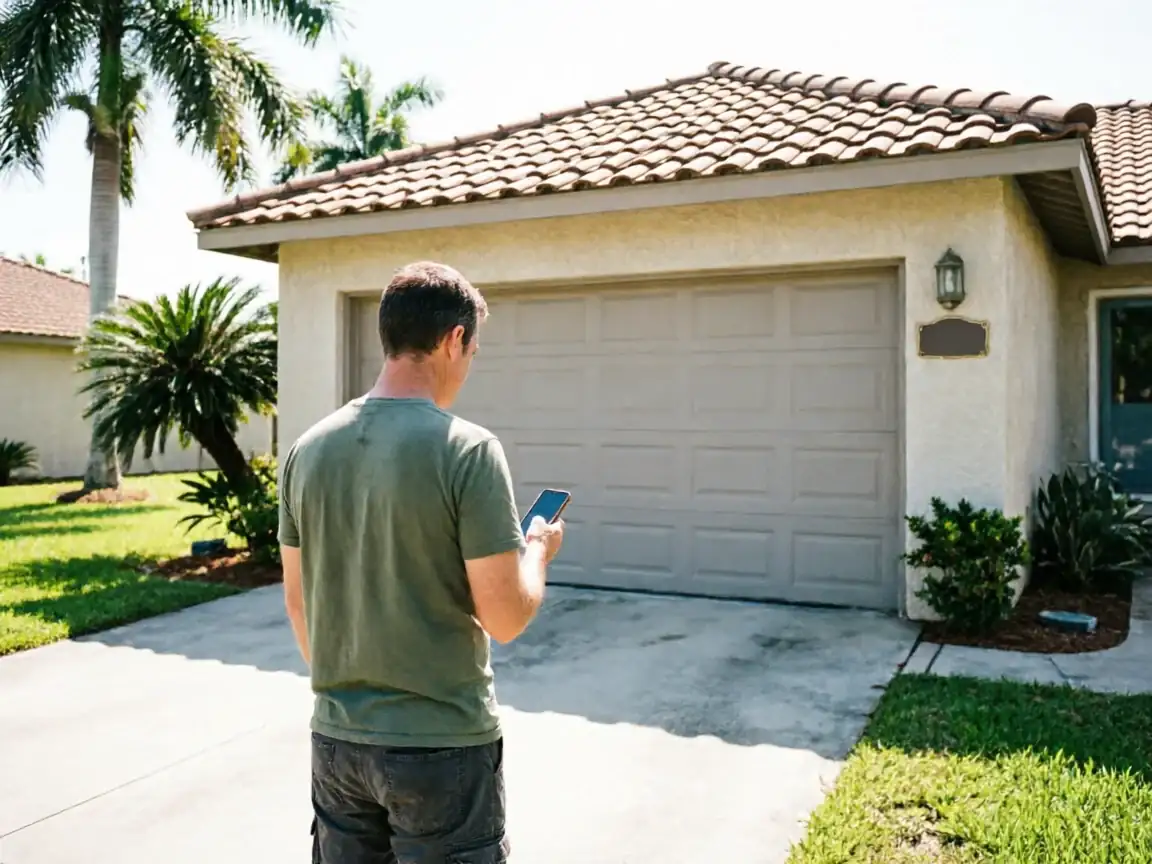
Describe the symptom - won’t open, loud bang, opener runs but the door won’t move.
2
On-site diagnosis
A technician tests the door under power and by hand and finds what actually failed.
3
Clear, up-front plan
You get the fix that’s needed and what drives the cost - before any work starts.
4
Repaired & tested
The repair is done, the door is set true and tested, and the work area left clean.
Not sure which repair your door needs in West Palm Beach, FL? Describe what it’s doing - every job starts with a diagnosis.
How often should I get a service call if my door hasn't broken yet?
If your house falls into that 1960s-70s stock common across this area, it's worth having the spring and hardware checked periodically rather than waiting for a failure, since corrosion here is gradual and doesn't announce itself the way freeze damage would in a colder climate.
Will you tell me if my door doesn't need repair?
Yes. If the springs, cables, and tracks are sound and the issue is cosmetic, we say so. We'd rather turn down a repair that doesn't make sense than sell a job on a door that's still fine.
Does the service area include North Palm Beach or Riviera Beach?
We work across the area including Riviera Beach, Lake Park, North Palm Beach, Palm Springs, Greenacres, Wellington, and the other named communities within roughly a 20-mile radius.
What's the biggest thing that fails on older doors around here?
Torsion springs and corroded cable on houses with original 1960s-70s hardware. The mild climate doesn't crack panels the way freeze-thaw cycles do elsewhere, but it does let corrosion work steadily on springs and fasteners over decades.
Ready to get your garage door sorted?
Tell us what it’s doing and where you are in West Palm Beach - we’ll take it from there.