Getting It Booked In
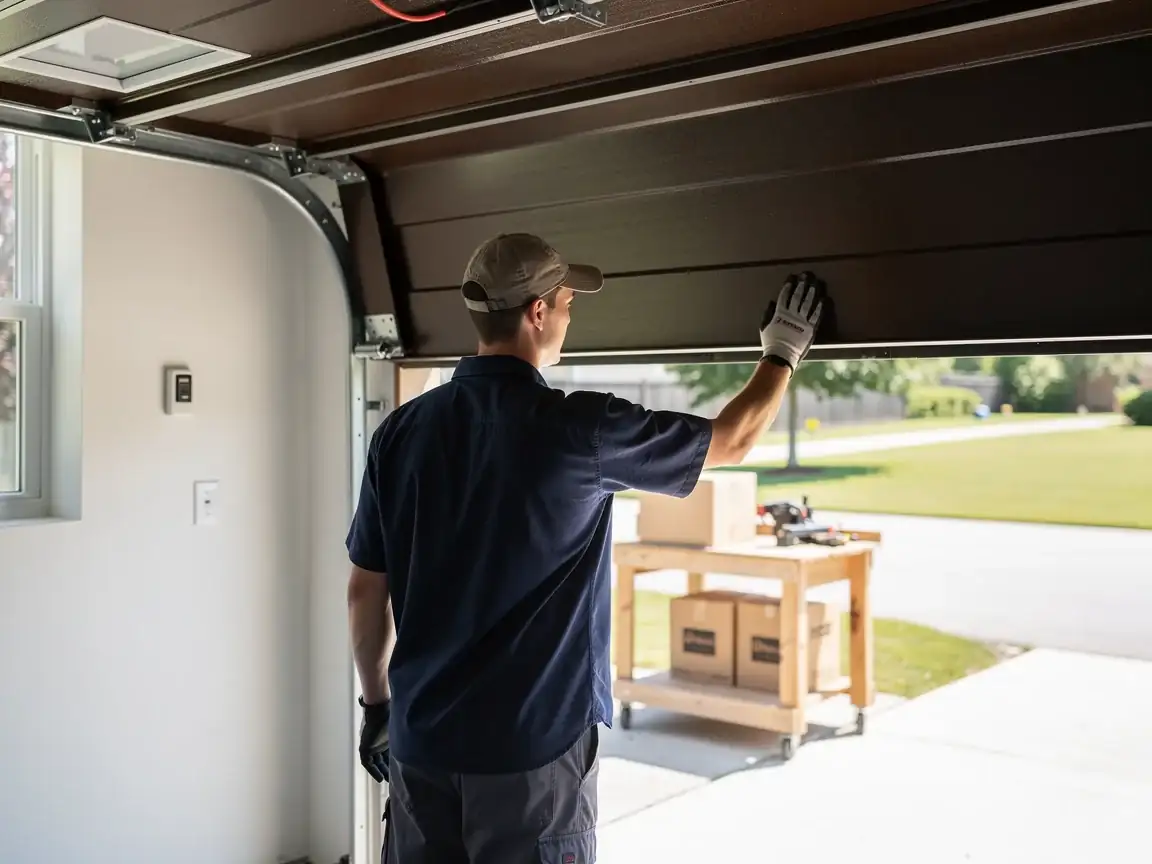
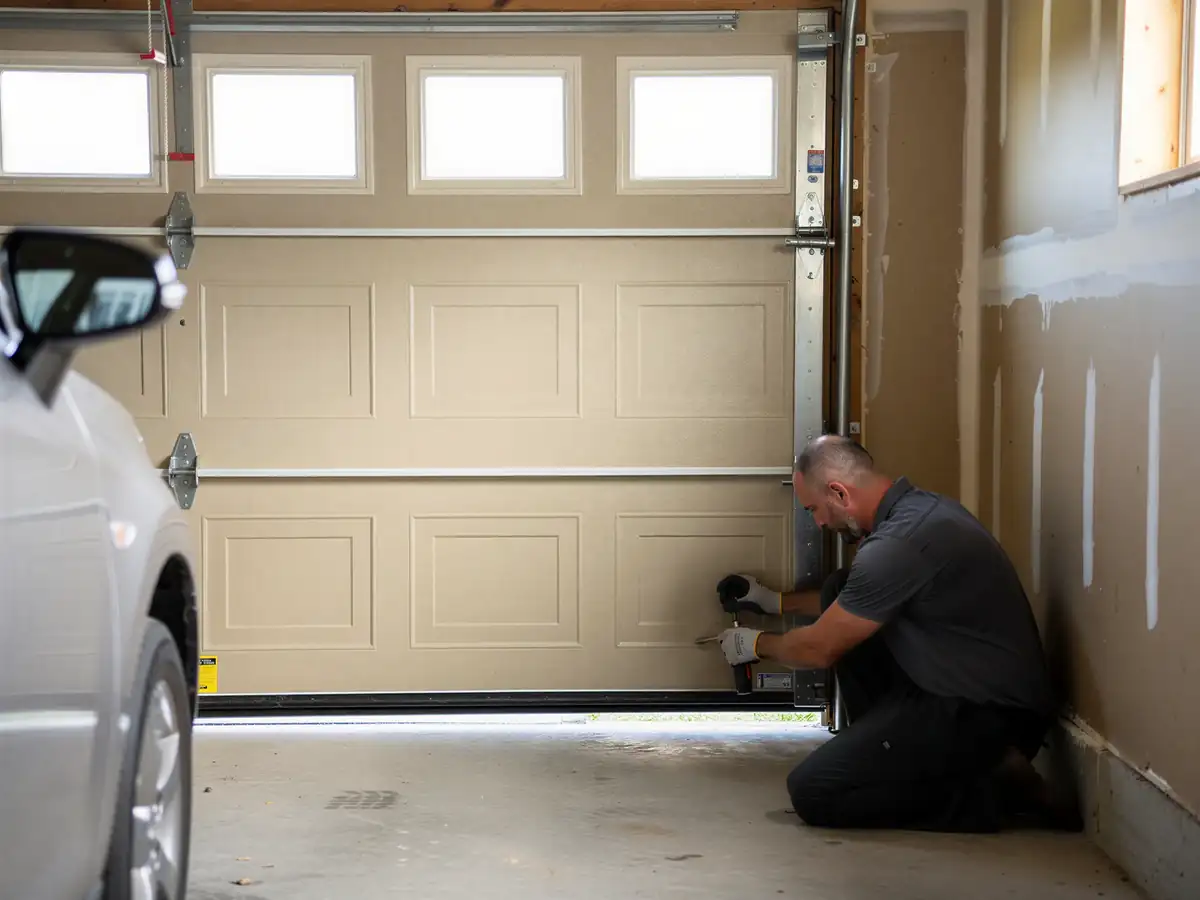
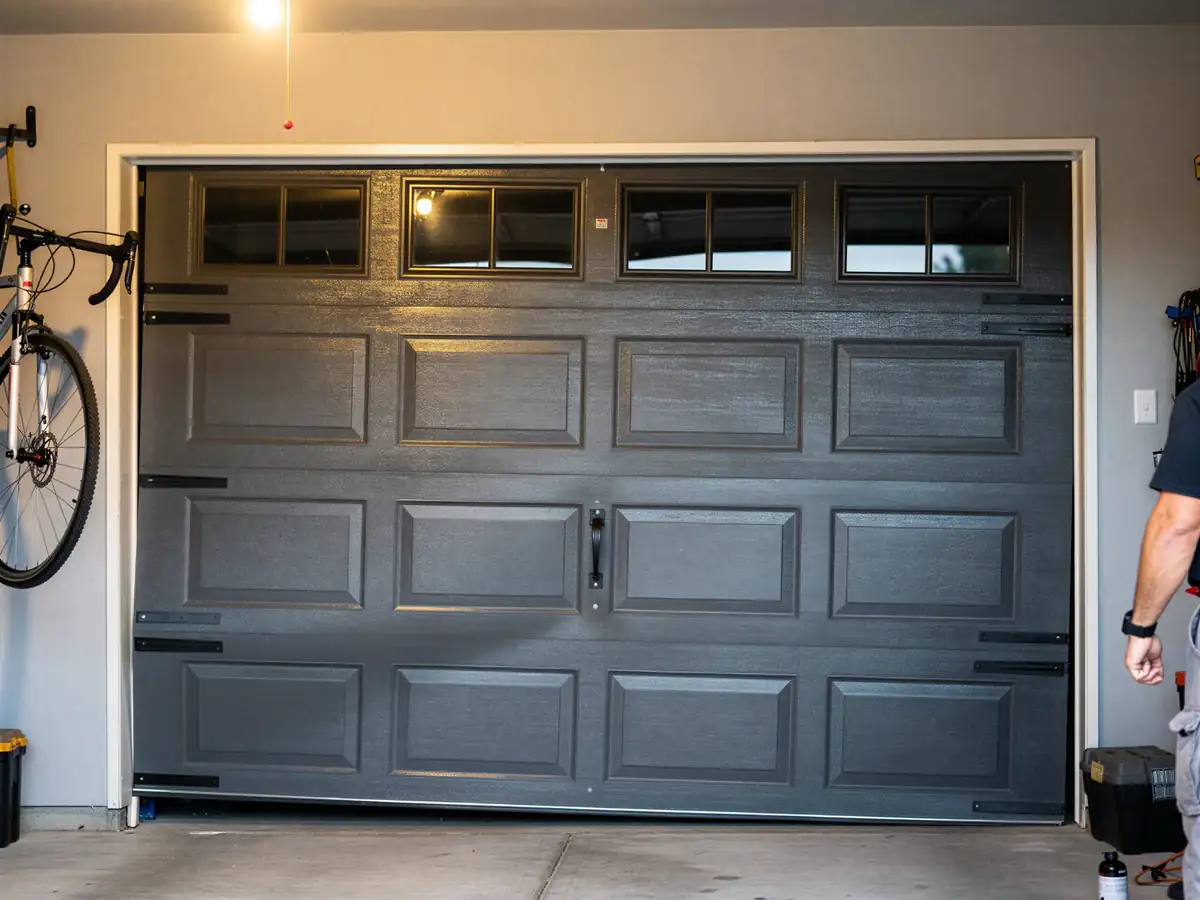
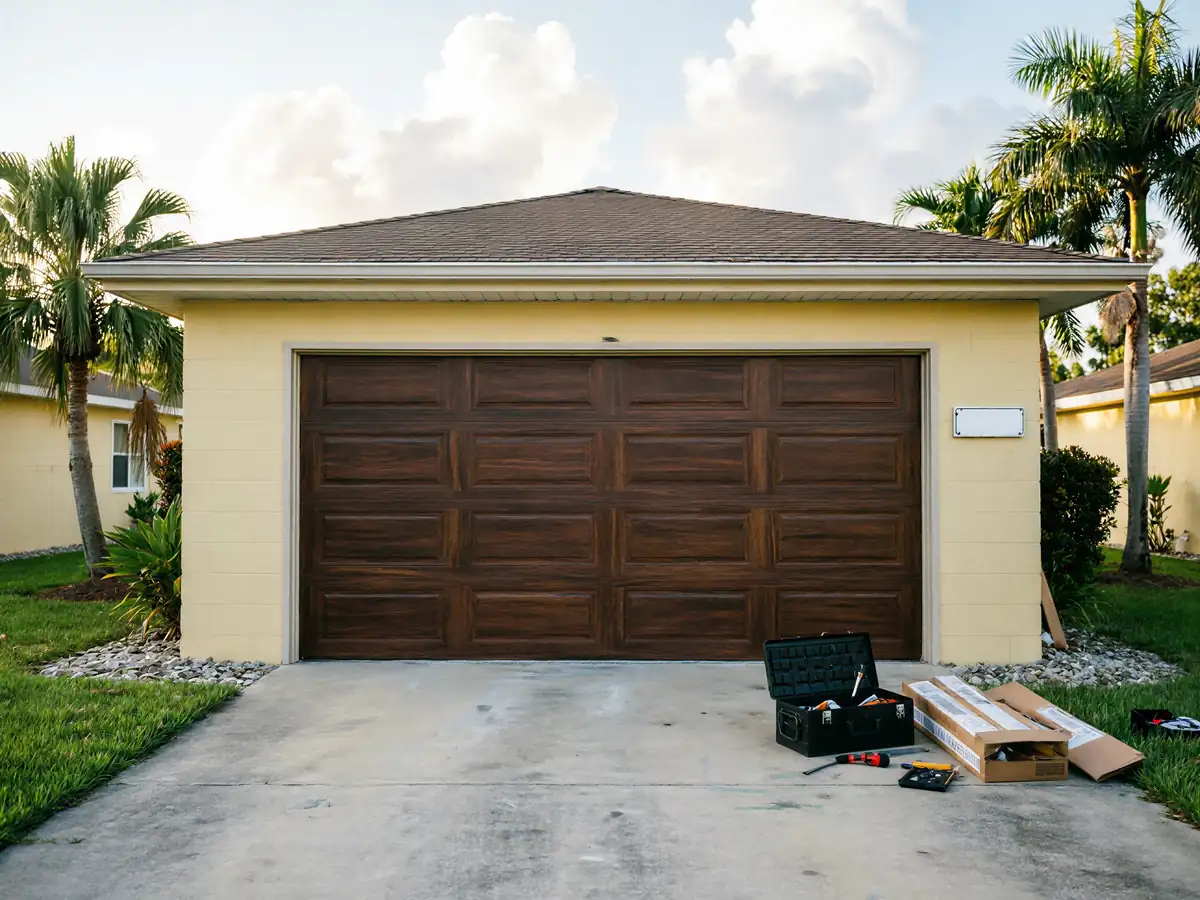
We don't keep a branch in Wellington - the crew and the trucks run out of West Palm Beach, about 11 miles away. That distance isn't a problem for an install; it just means we schedule it as a full job rather than something squeezed between two closer calls. Wellington sits close enough to Royal Palm Beach, about 7 miles northeast, and Loxahatchee Groves, about 9 miles west, that a single afternoon route can cover more than one job in the area, which keeps the trip efficient on our end. For a homeowner booking a new door, that means picking a day rather than expecting a same-morning slot - we'd rather give you an accurate window than promise speed we can't back from across town. Once we're on site, a standard new-door install is a few hours of work: old door and track out, new jambs checked and shimmed if the opening has settled, new door hung, opener mounted and balanced. We measure the opening before we quote so there are no surprises about header clearance or side-room for the track once we arrive.
The Complications
Wellington's climate band is the same mild, humid coastal pattern that runs across the whole service area - no hard freezes, but steady heat and moisture working on steel and rubber year-round. On a house built in the mid-1990s, that means the weatherstripping at the bottom of the door is almost certainly original or close to it, and it's usually cracked or compressed flat by now, even if the panels themselves still look fine. The bigger issue we run into on this era of home is the opener. A lot of 1990s houses were built with half-horsepower chain-drive units that were perfectly adequate for the lighter doors of the time, but if a homeowner has since upgraded to a heavier insulated door, that original opener is now straining against more weight than it was sized for. Household income in Wellington runs well above the wider service area's median, and it shows in what people ask for - insulated steel sectionals and belt-drive openers, not bare minimum replacements. Matching the opener's horsepower and drive type to the new door's actual weight is the step that gets skipped most often, and it's the one that causes callbacks.
The DIY Question
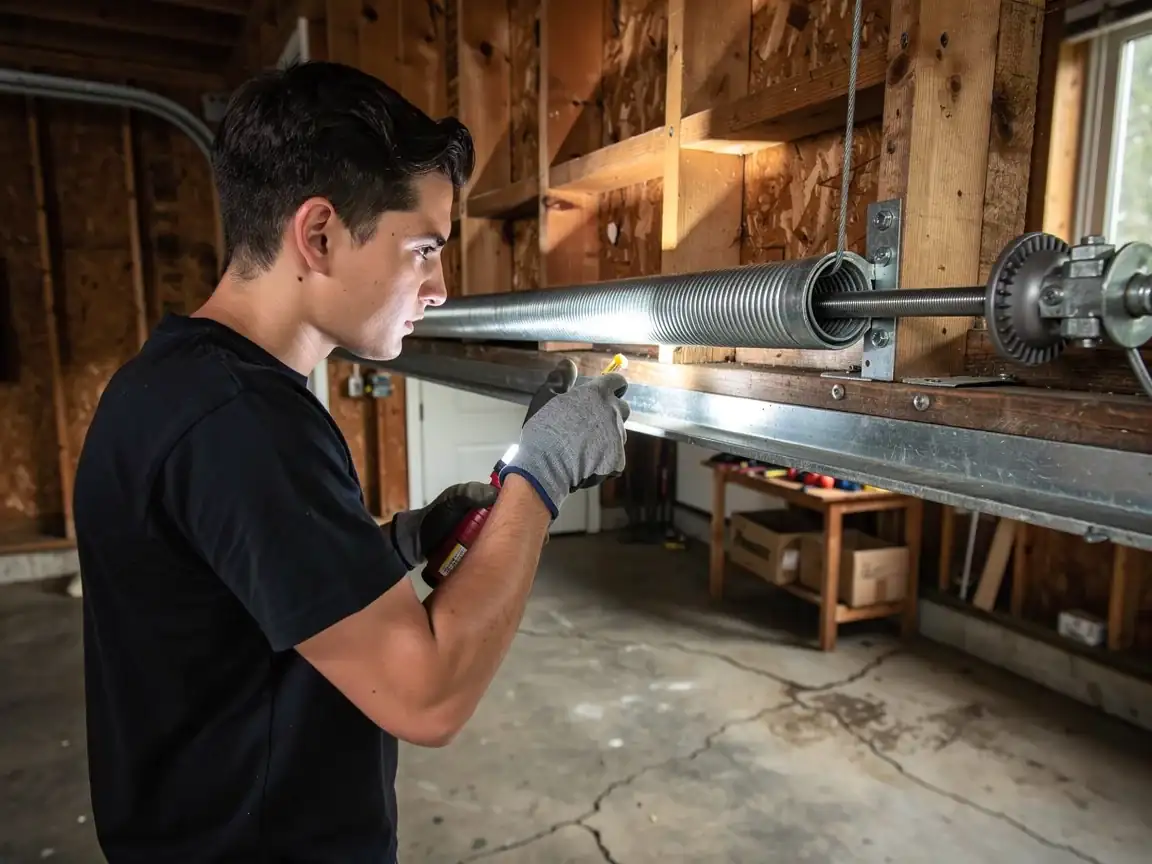
A new garage door is not a reasonable weekend project, and we'll say that plainly. The springs are under enough tension to cause a serious injury if they let go while you're working on them, and getting the door panel square in the opening by yourself is harder than it looks on a video. Where we do see homeowners handle things themselves reasonably: swapping a remote battery, lubricating hinges and rollers, or replacing weatherstripping on an otherwise sound door. Those are fine DIY jobs. Full door and opener replacement isn't, and we won't pretend otherwise just to sound helpful. One honest limitation on our end - if your opening is non-standard or the framing has shifted more than a small shim can correct, that's carpentry work outside what we do, and we'll tell you that up front rather than force a door into an opening it doesn't fit.
Parts We Carry
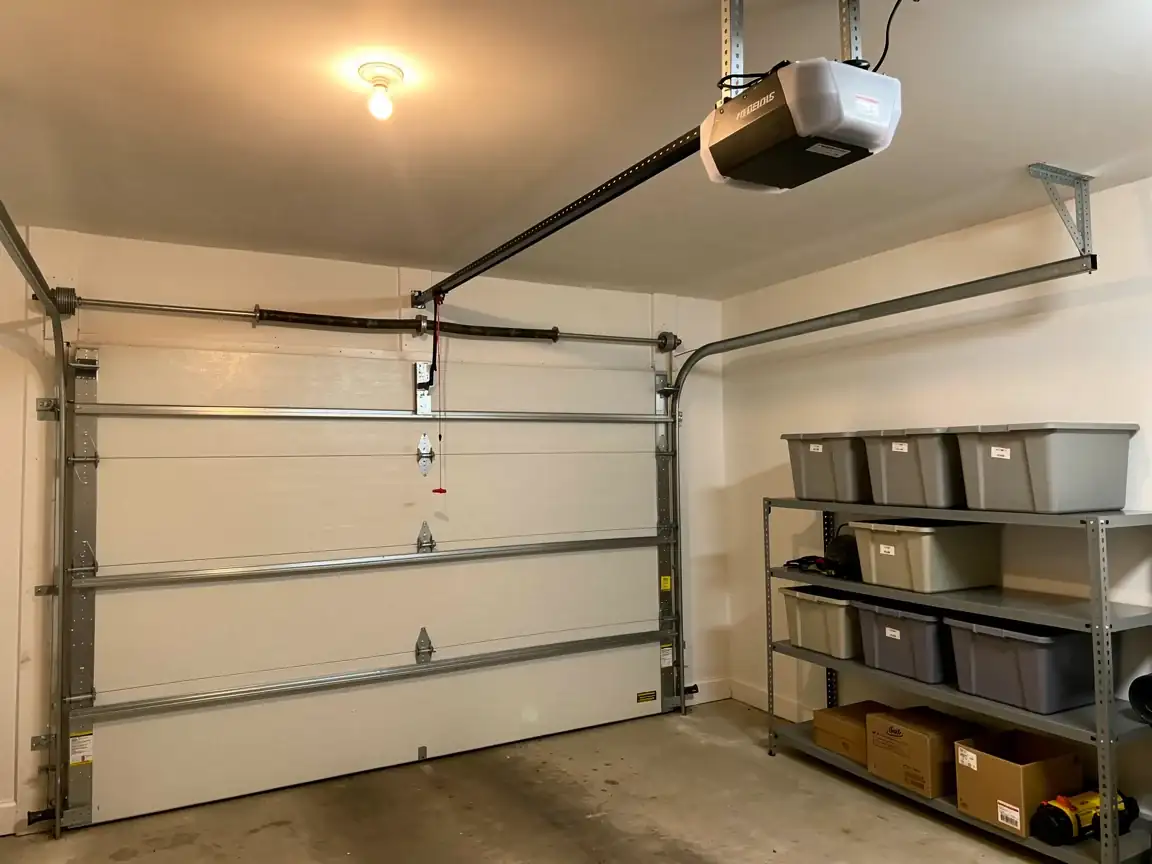
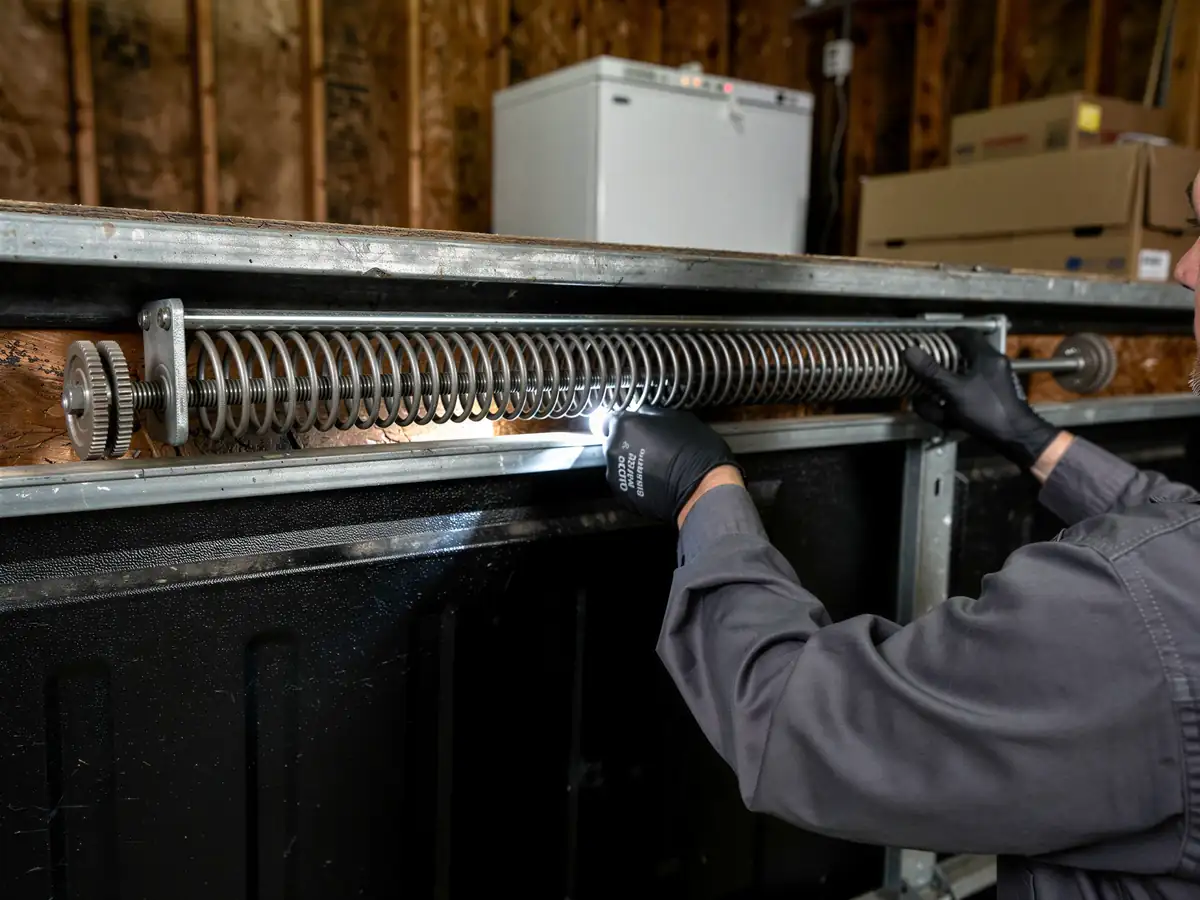
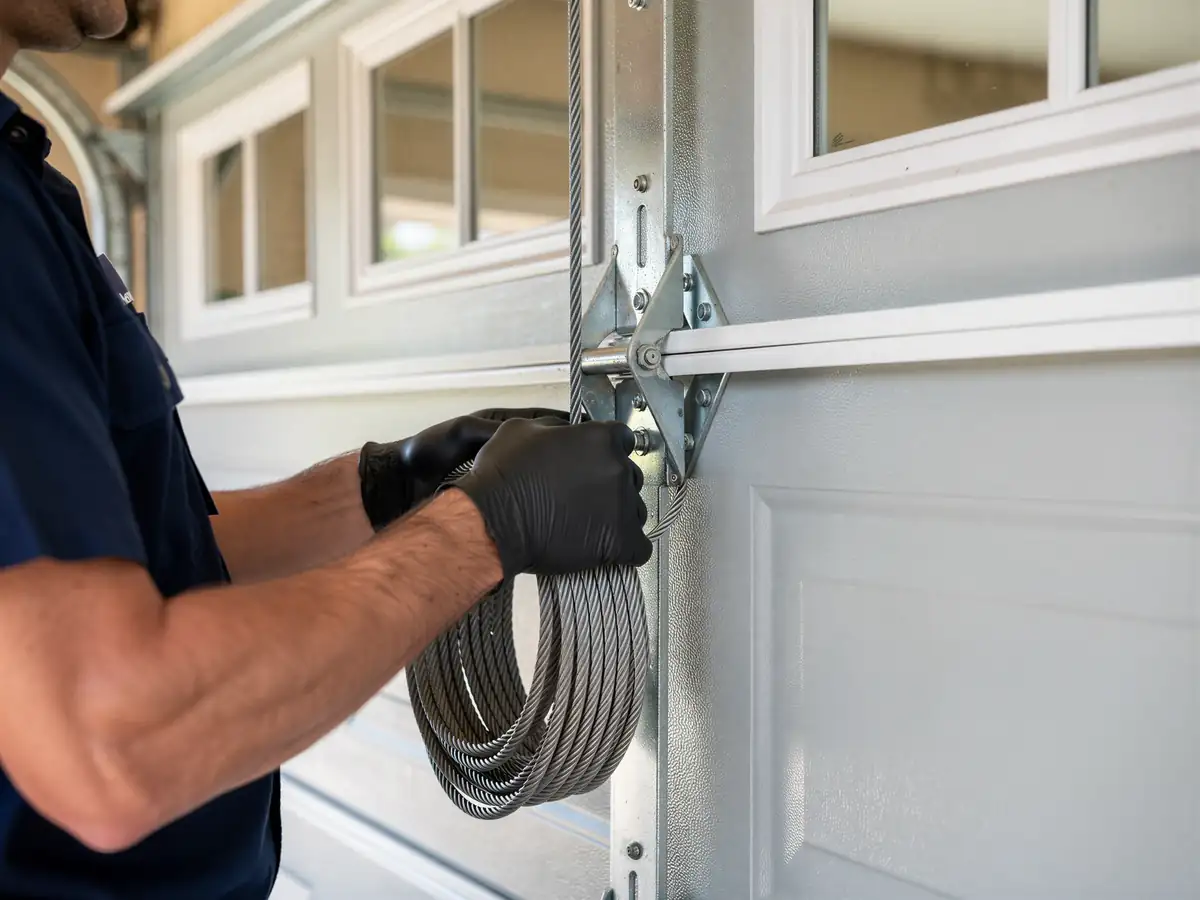
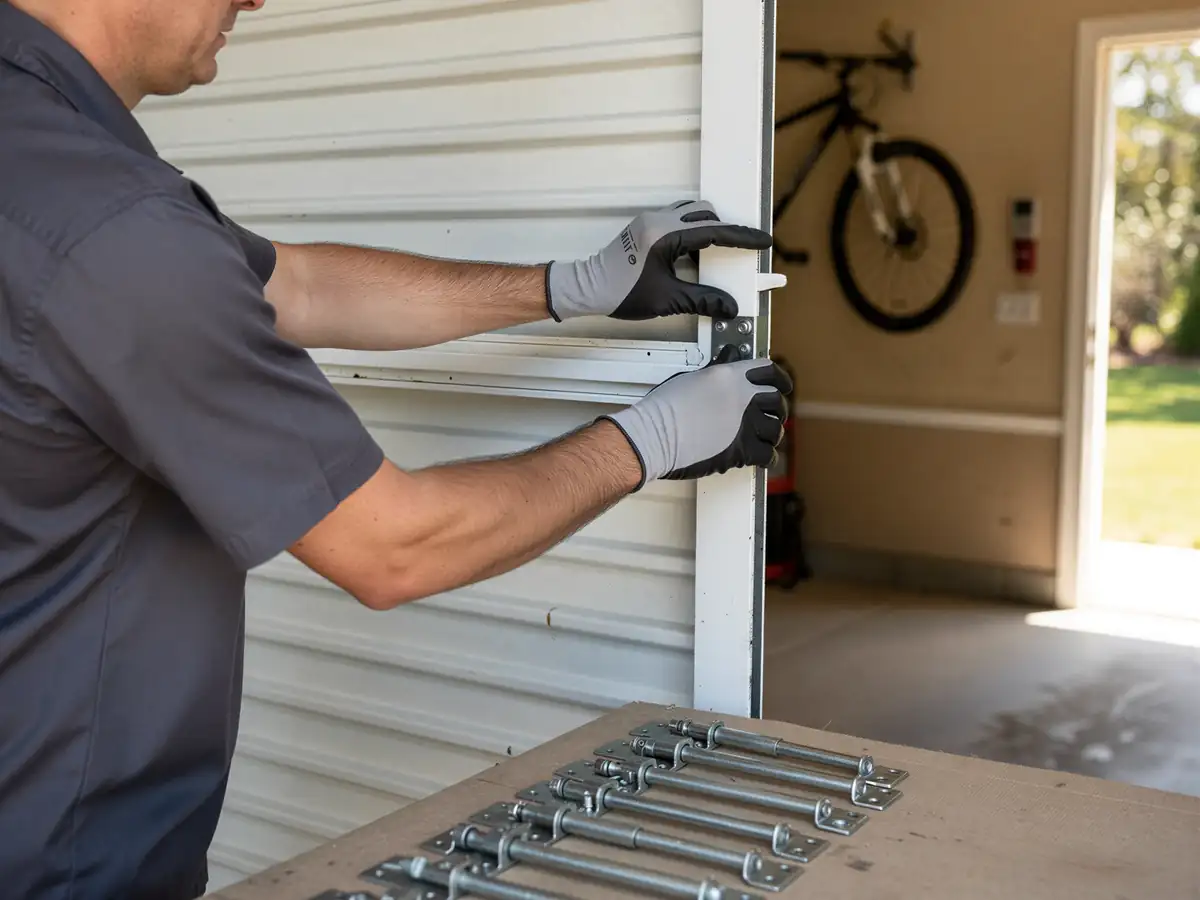
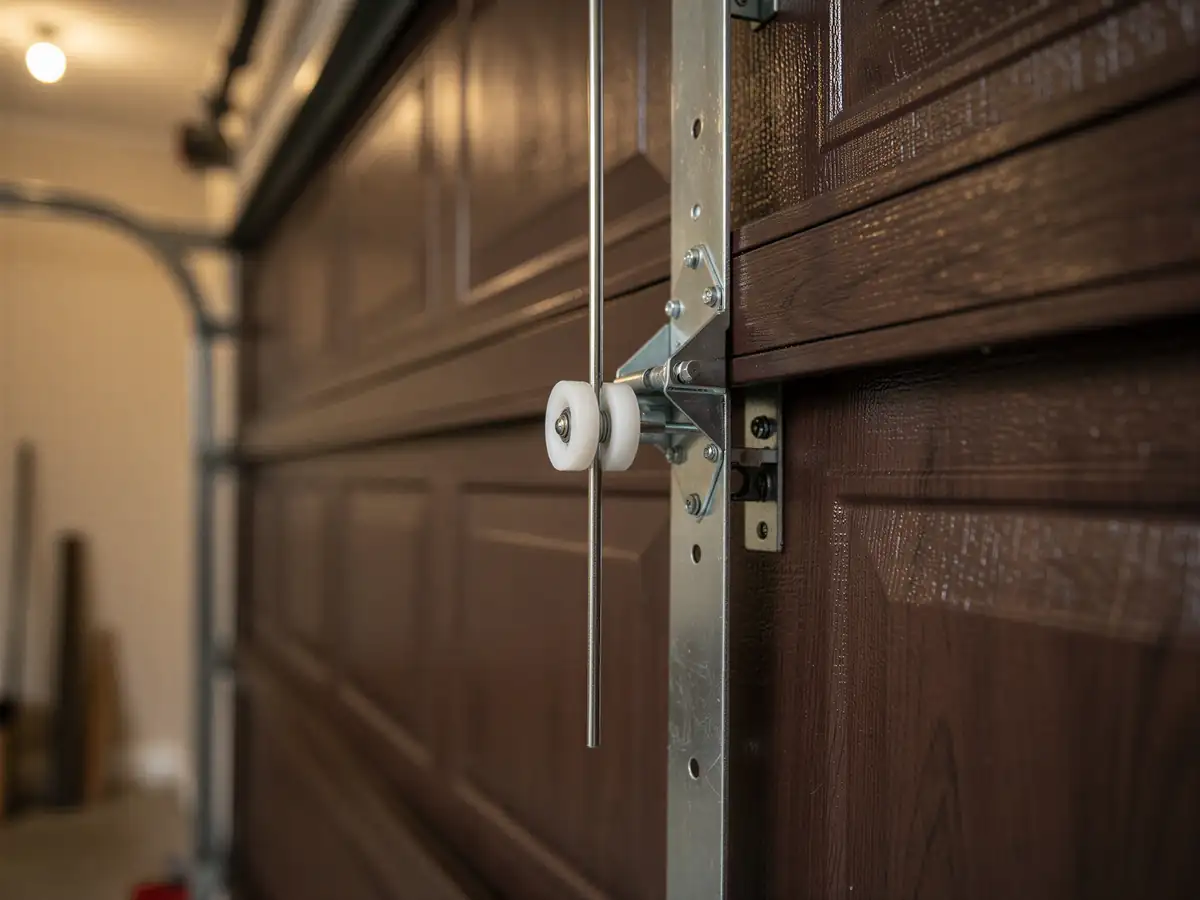
For new installs in a house of this era, we stock steel sectional doors in standard residential sizes, insulated and non-insulated, along with the torsion and extension springs sized to match. Openers come in belt-drive and chain-drive, both in horsepower ratings that cover anything from a light single door to a heavier insulated double. We carry nylon rollers as the standard replacement over steel, galvanized track sections, and new jamb hardware for openings where the originals have worn or rusted. What we don't keep on the truck is custom or oversized doors - anything outside standard residential dimensions is a special order, and that adds lead time we'll quote honestly rather than guess at. For a straightforward new install on a standard-size opening, most of what we need is already in the truck the day we arrive.