The Cost of This Job
We're not going to print a number here that doesn't hold up once a tech is standing at your door
Spring repair pricing depends on whether you've got one torsion spring or two, what the door weighs, and whether the drums, bearings, or cables went with it when the spring broke. A single door with one spring that just snapped is a different job than a double door that's been running on a mismatched pair for years.
What we can tell you is how we price it
We look at the door, tell you what's actually wrong, and quote before we touch anything. If the torsion tube or the end bearing plate is shot too, we say so up front instead of discovering it halfway through and adding a second trip charge. Across the service area - from the coastal stretch down through the inland neighborhoods - median household income runs around $92,382, and most homeowners we talk to want the real number once, not a teaser rate that grows once the truck's in the driveway.
- $92,382 median household income
One honest limit: if your opener, track, and panels are all original from a 1970s build alongside the spring
Replacing just the spring sometimes isn't the better move. We'll tell you when the whole system is close enough to the end that patching one part just delays the next call.
Parts We Carry
Housing stock across this service area spans 1965 to 2021, with a median build year around 1978, and that spread is exactly why we stock a wider spring range than a shop working a newer suburb would need. A door installed in 1979 on original torsion hardware is not compatible with the spring a 2015 build uses, even if both doors look the same size from the driveway.
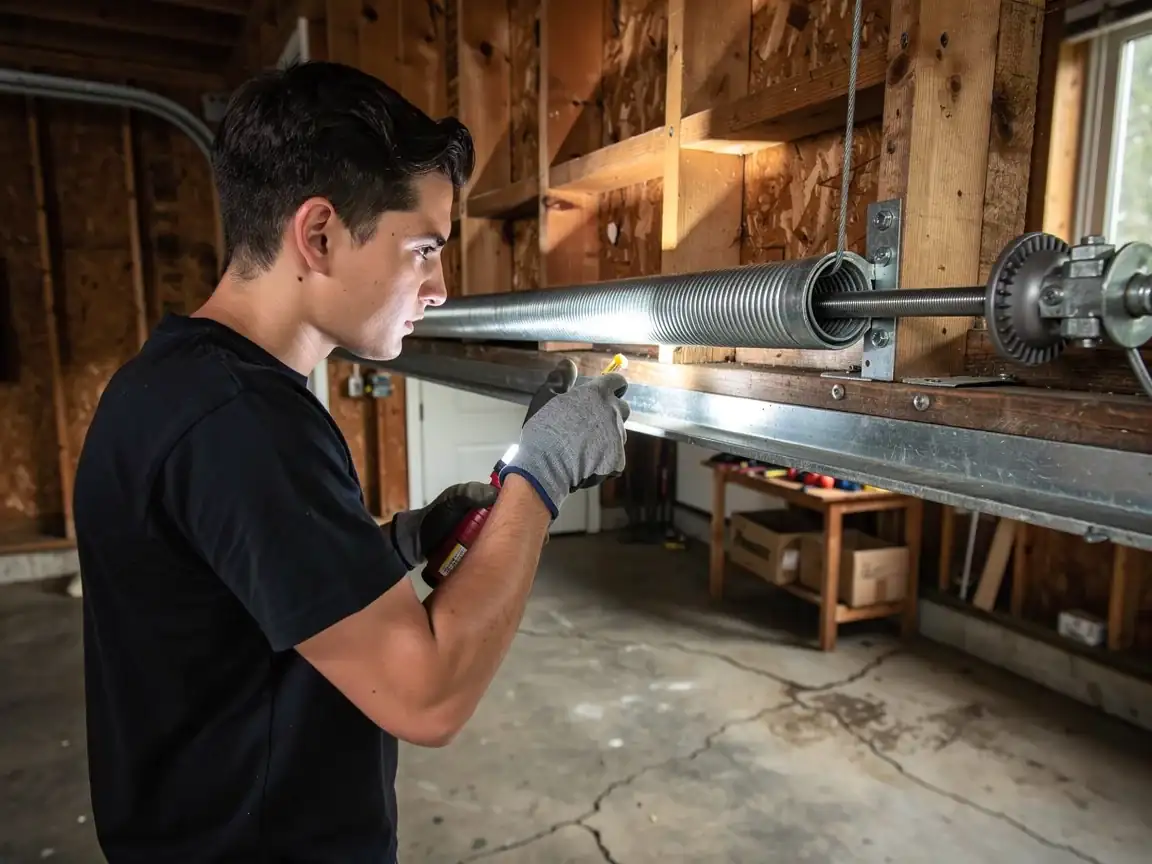
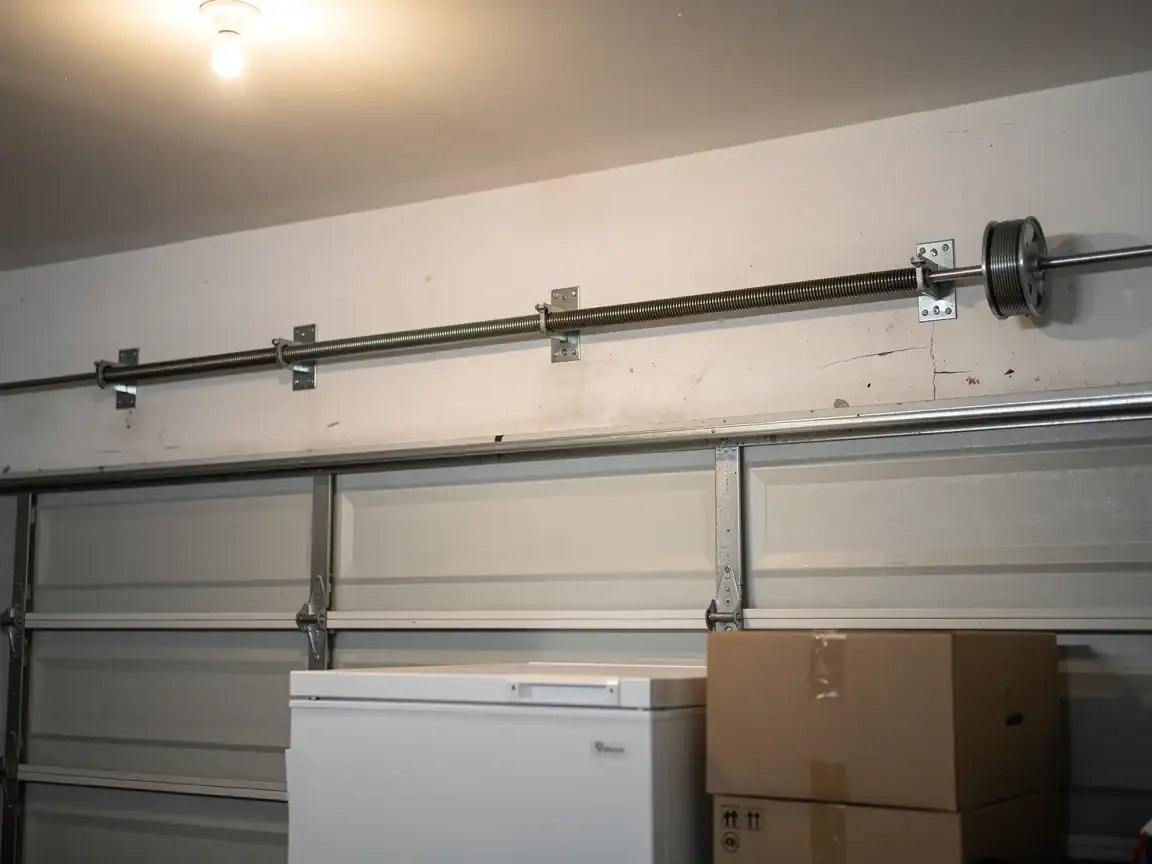
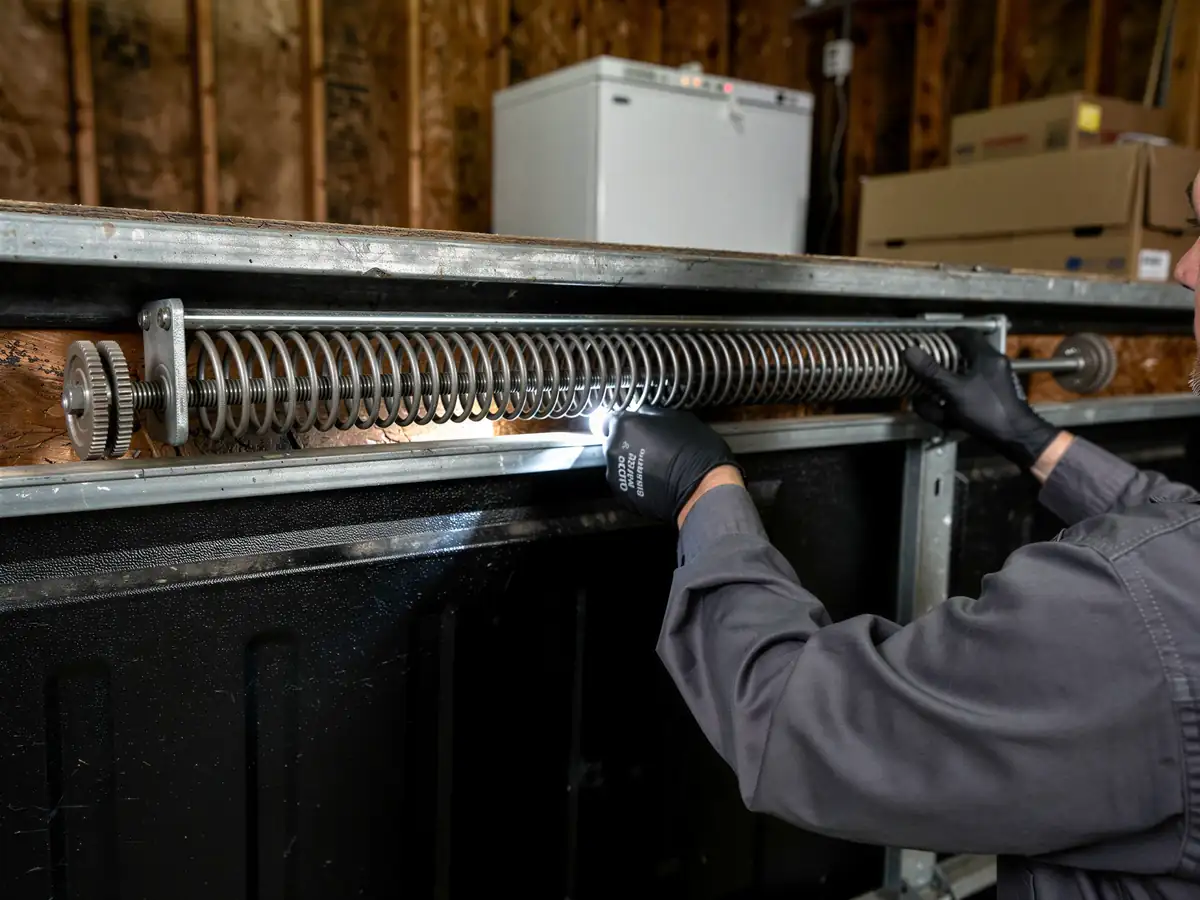
We carry torsion springs in the wind and wire sizes that match the older side-mount and center-mount setups common across the 21 named areas in this service area's 1960s-70s stock, plus the newer standard-duty springs that go on more recently built doors. We also keep extension springs on the truck, since a chunk of the older housing never got converted to torsion.
The gap: if your door takes an oversized commercial-grade spring or a specialty wind we don't have on the truck that day, we'll tell you straight rather than force a close-enough substitute onto your hardware. That's a short-order item, not a same-visit fix, and we'd rather say that than hand you a spring rated wrong for your door.
How It Shows Up
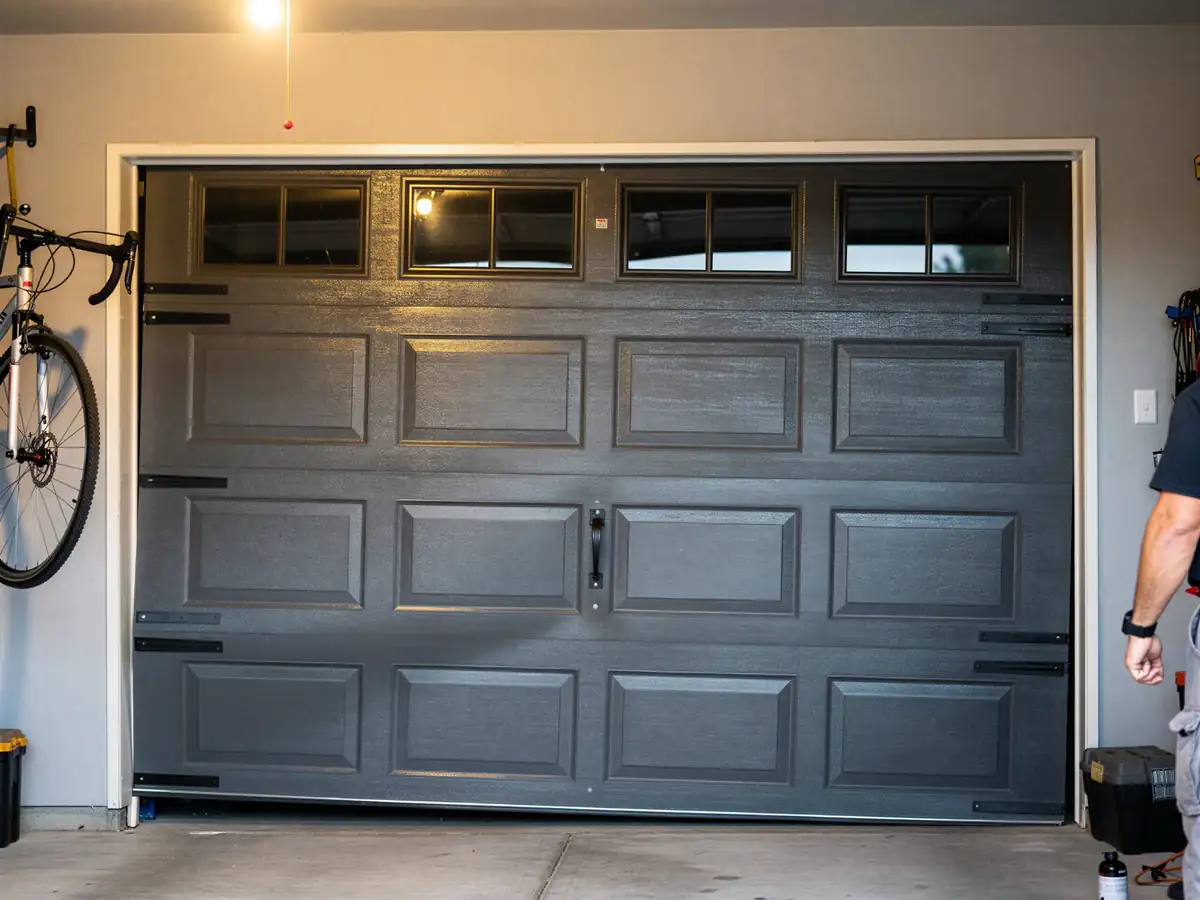
A torsion spring usually goes with a bang loud enough that people inside the house hear it and come check the garage. After that, the door either won't budge when the opener tries, or it comes up a few inches and the opener strains against the full weight of the door with no spring to help carry it. Extension springs tend to fail quieter - one side droops, the door goes crooked in the track, and the cable on that side goes slack.
The mild temperate climate here doesn't put springs through the freeze-thaw cycling that kills them early up north, so the usual sign isn't winter stiffness - it's just wear hitting its cycle count, often on a door that's been opened and closed the same way for decades without the spring ever being replaced.
If you catch it early - a door that's suddenly heavier to lift by hand, or an opener that groans more than it used to - that's the spring giving warning before it lets go completely. We'd rather get the call at that stage than after the cable's jumped the drum.
What Causes It Around Here
Most of the failures we see trace back to the age of the housing stock itself
With a median build year around 1978 and plenty of homes dating back to 1965, a large share of the doors we work on are carrying springs that have never been swapped - original hardware pushed well past a normal service life. Torsion springs are rated in cycles, and a door that's opened twice a day for forty-plus years runs out of cycles whether anyone's paying attention or not.
The climate here plays a smaller role than people expect
Mild temperate conditions mean we're not dealing with the extreme cold-snap failures some other regions see, but the humidity and salt air common to this part of Florida still work on unprotected steel coils over enough years, especially on doors near the coast within a few miles of the water.
Add in houses where the opener was upgraded at some point but the spring never was, and you get a mismatch
A newer, stronger motor masking a worn spring right up until the moment it doesn't.