What to Check
Walk out to the garage before you touch the opener
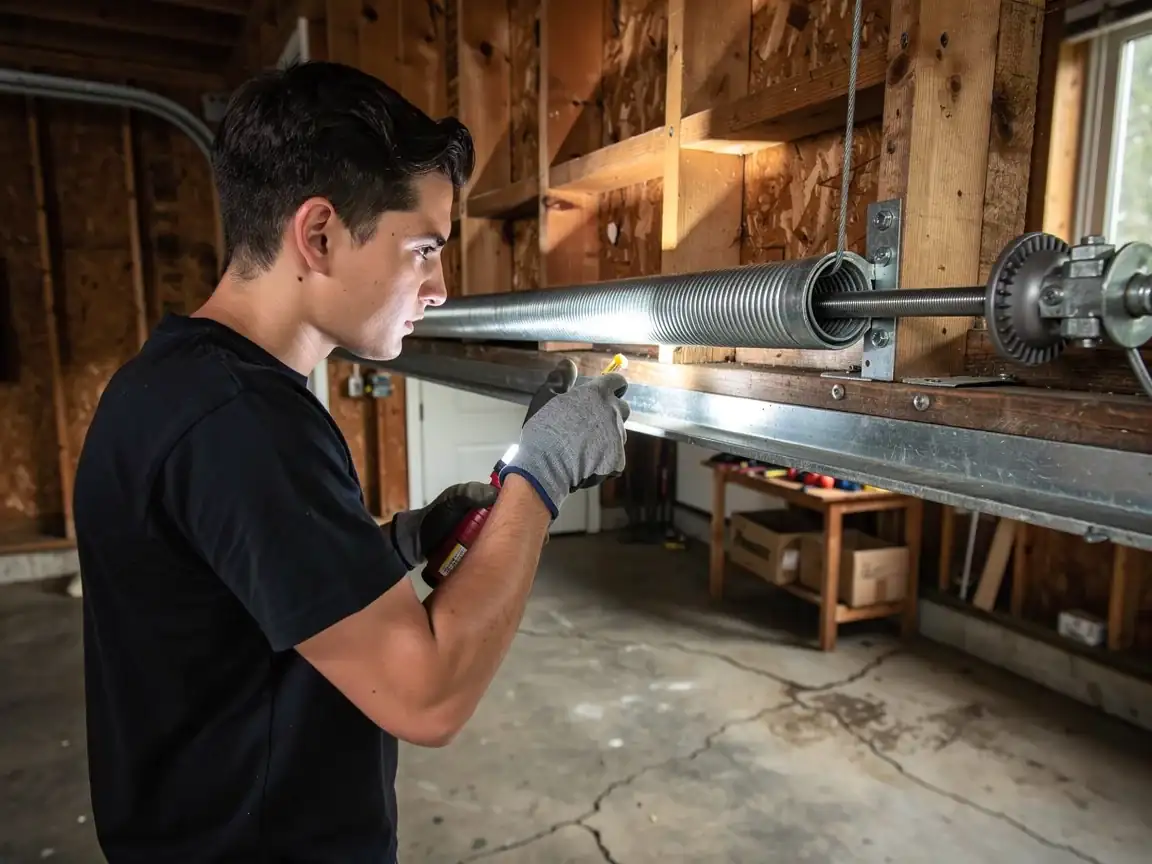
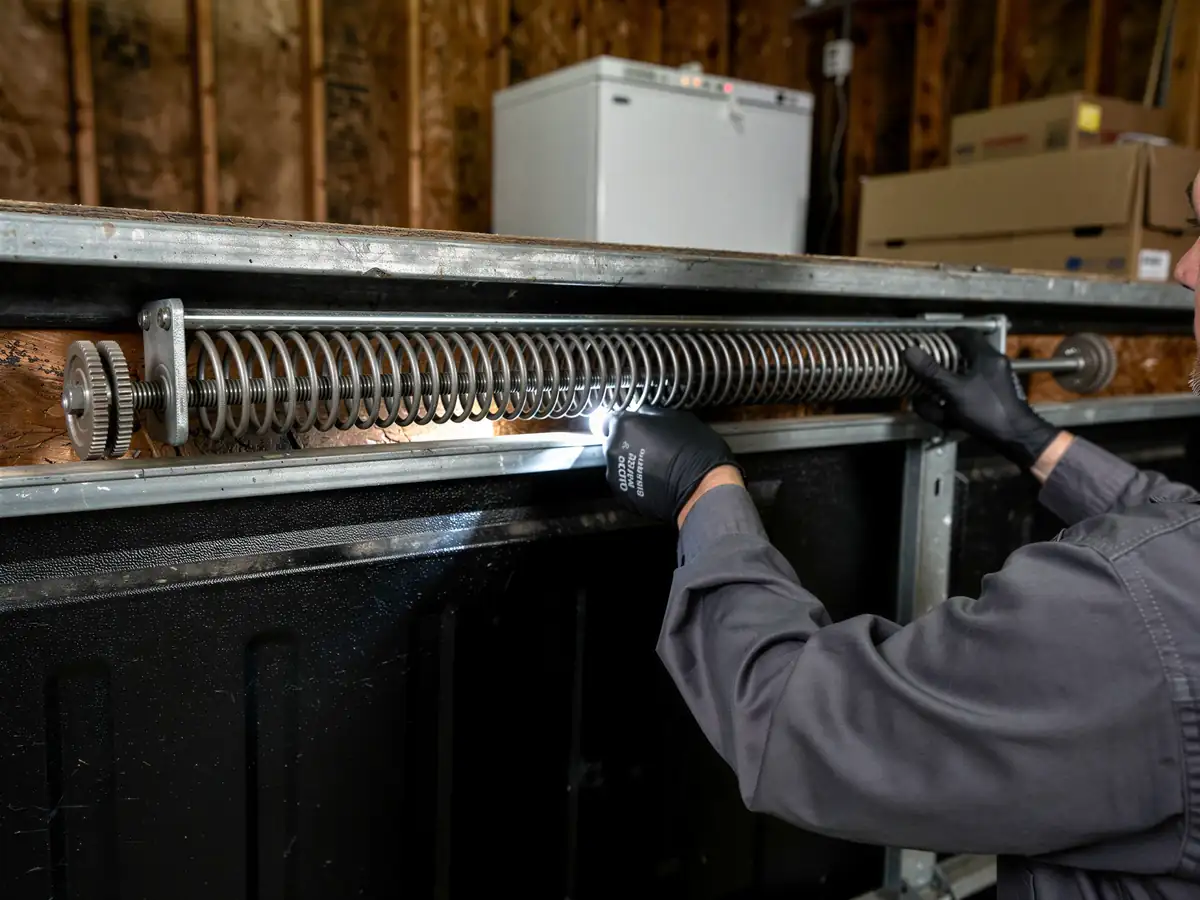
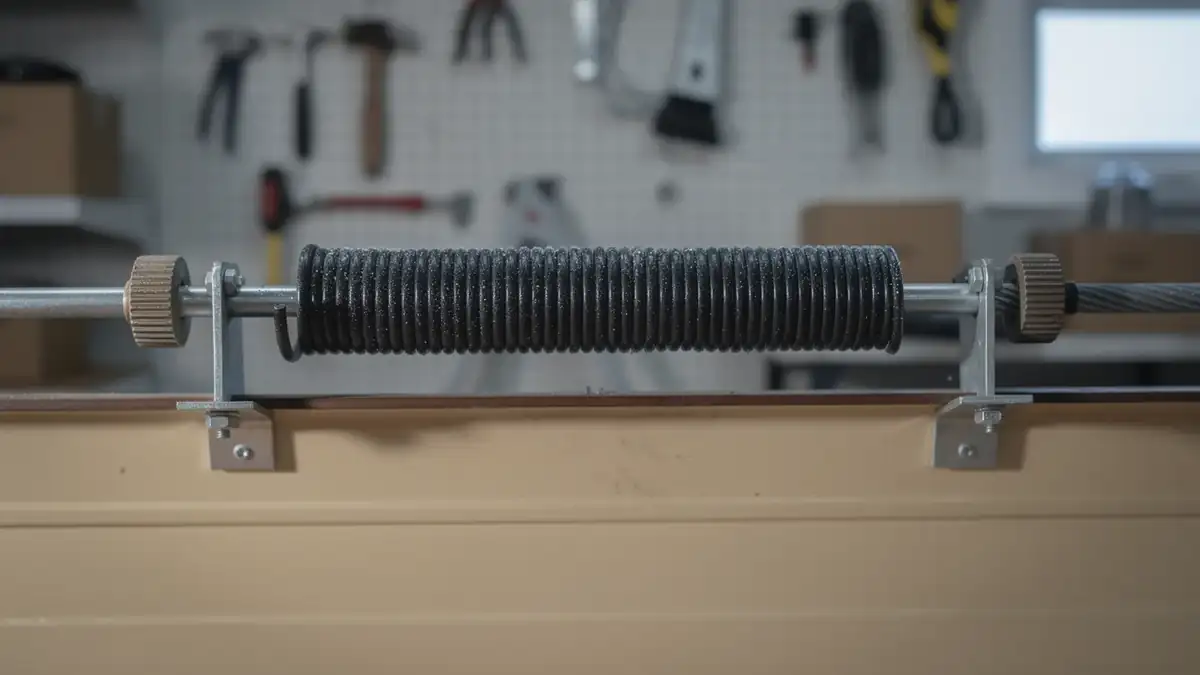
Look at the torsion spring above the door - the long coiled bar over the header. If it's snapped, you'll see a clean gap in the coil, sometimes with the two ends sprung apart an inch or more. Don't pull the emergency release and try to lift the door by hand if the spring is broken; a double door without spring tension can weigh well over a hundred pounds and it will drop fast.
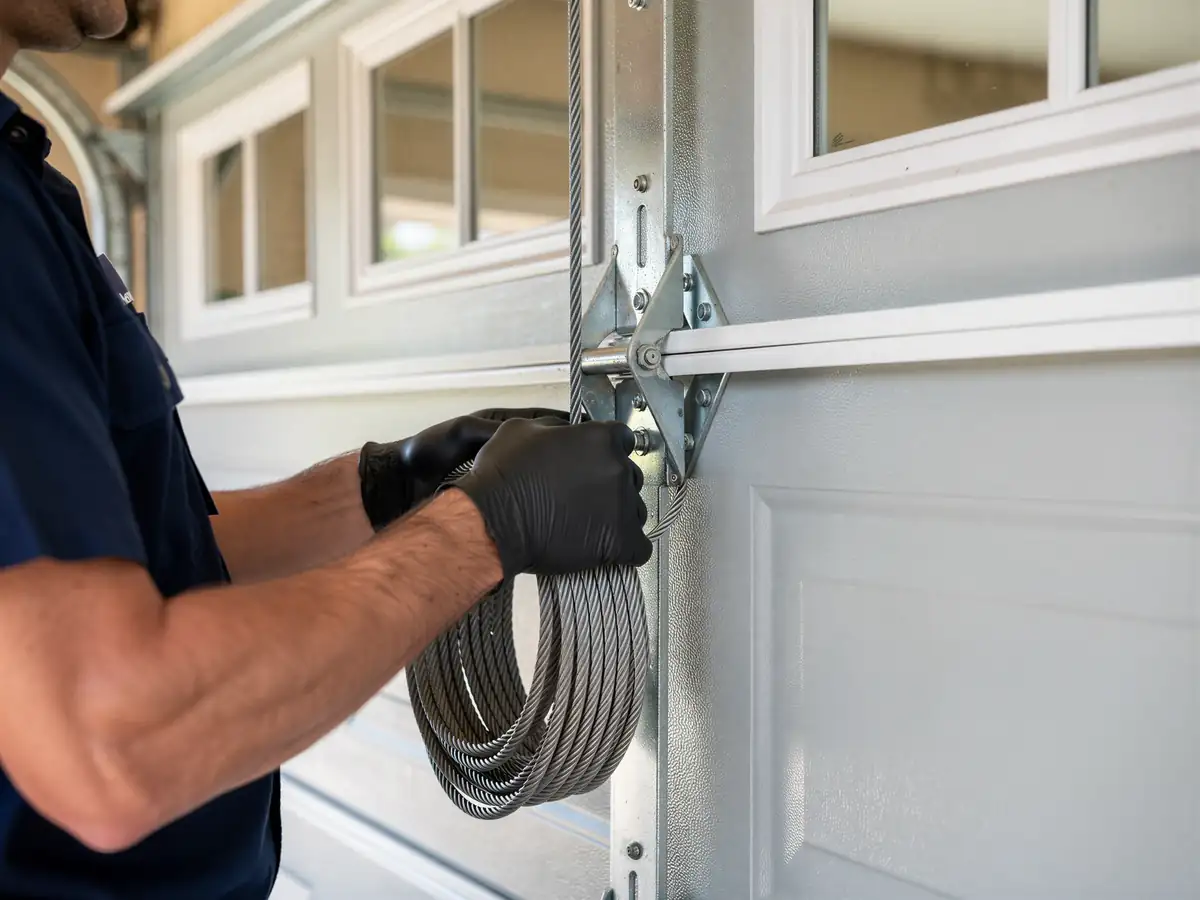
Check the cables next, the thin steel lines running down each side to the bottom bracket
A spring failure sometimes takes a cable with it, especially on doors that have been in service since the 1970s and 80s - common ages across this area given a median build year of 1978. If a cable is frayed or off its drum, that's a second job, not a bonus fix.
One honest note: if your spring is original to a house built before 1980
We're not going to tell you it just needs oiling. Steel fatigues. A spring that's held thirty-plus years of daily cycles and then goes in a cold snap was already close to its limit - the cold just finished the job.
The Situation
West Palm Beach sits in a mild temperate band, so garages here don't deal with the freeze-thaw cycling that wrecks hardware up north. But the housing stock across this service area was mostly built in the 1960s and 70s, with the broader range running 1965 to 2021 and a median year of 1978. That's the real story: a lot of torsion springs out there are original or close to it, sized and wound decades ago for a door that's since had panels replaced, insulation added, or a heavier opener bolted on.
Springs don't fail because of age alone - they fail on cycle count, and a 45-to-60-year-old house has had a lot of door openings. A cold snap doesn't create the weak link. It finds it. Steel contracts slightly when the temperature drops, and a spring that's already fatigued from decades of cycling has less margin left when that happens. In a climate this mild, residents don't expect it, which is why it tends to catch people off guard - they've never had a reason to think about what a 40-degree morning does to forty-year-old steel.
Leaving It Alone
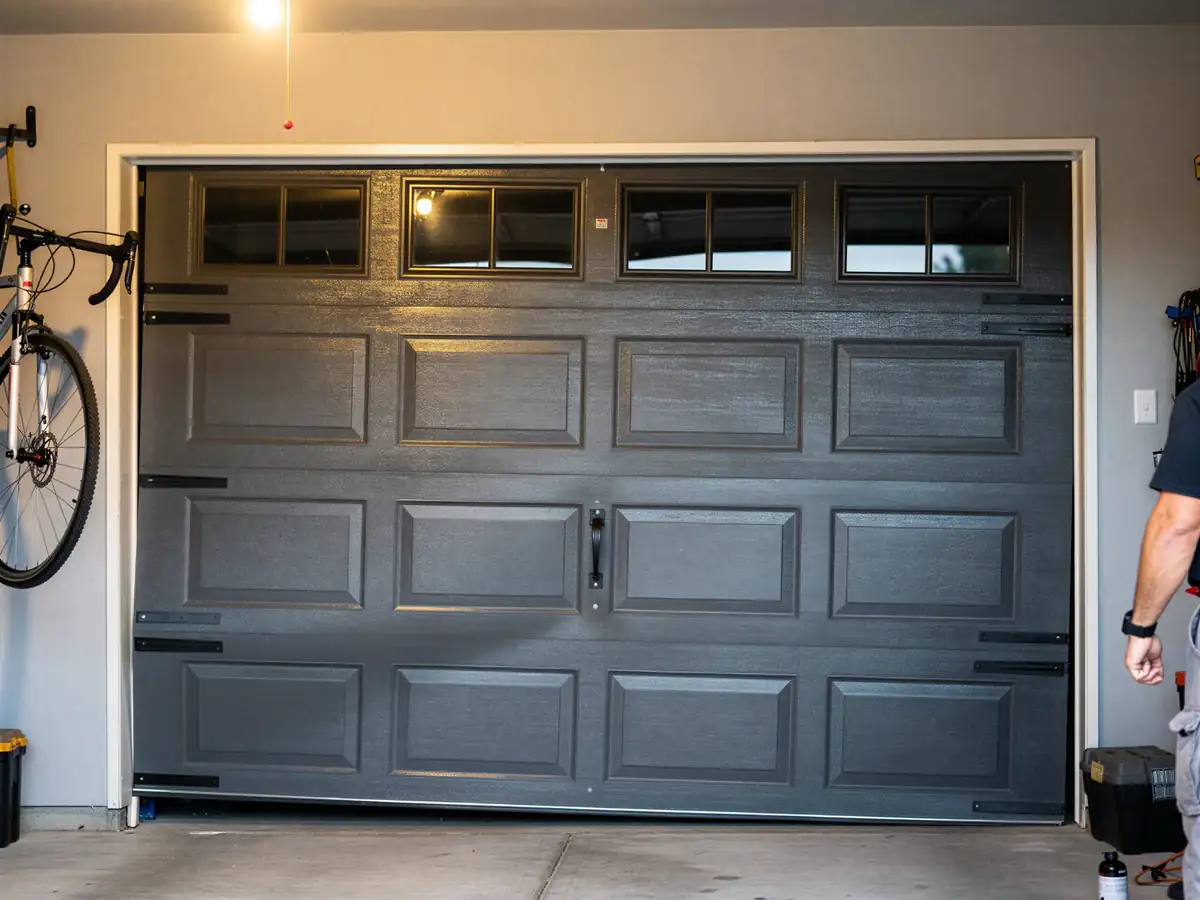
A broken spring doesn't get better sitting there. The opener will keep trying to lift the door against dead weight, which burns out the motor or strips the gear - a second repair stacked on the first. If the door is stuck halfway, leave it. Don't force the opener past the point it stalls.
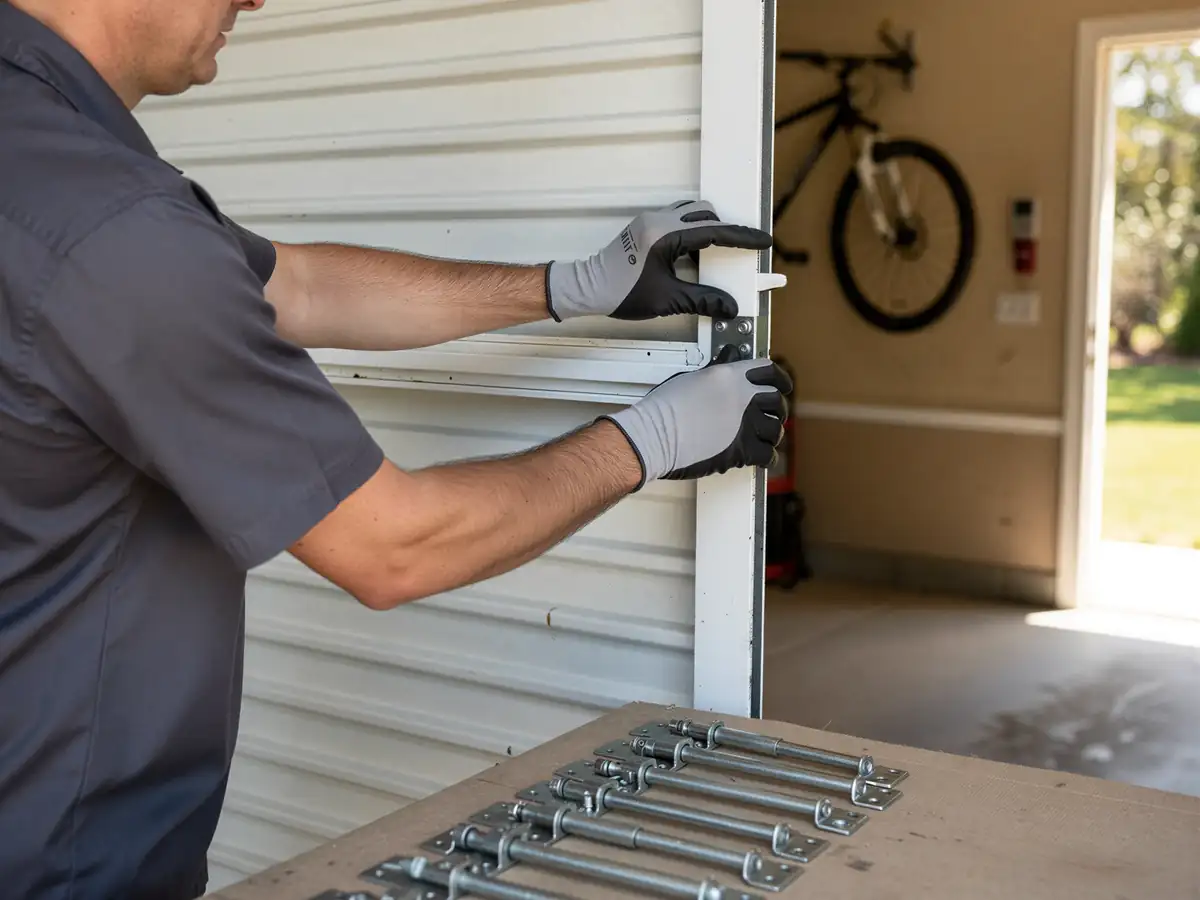
We won't tell you every spring failure means a new door. On most of the 46,915 owner-occupied houses in this service area, a spring replacement is a contained job - the track, hinges, and panels are usually fine even when the spring lets go. Where we draw the line is a door old enough that the track is bent, the rollers are worn through, or the panels are rusted at the bottom - at that point a spring fix is money into a door that's going to need replacing within a year or two anyway, and we'll say so instead of charging you twice.
What the Weather Here Does to It
West Palm Beach doesn't get the freeze cycles that crack concrete and snap brittle metal up north
The mild temperate climate here is easy on hardware most of the year. What it does instead is humidity and salt air, which corrode springs and cable ends slowly and quietly, with no obvious warning sign until the coil finally gives. A rare cold morning just adds one more stress to a spring that's already been thinning from corrosion for years.
So when a spring goes here on a cold snap, it's rarely the cold alone
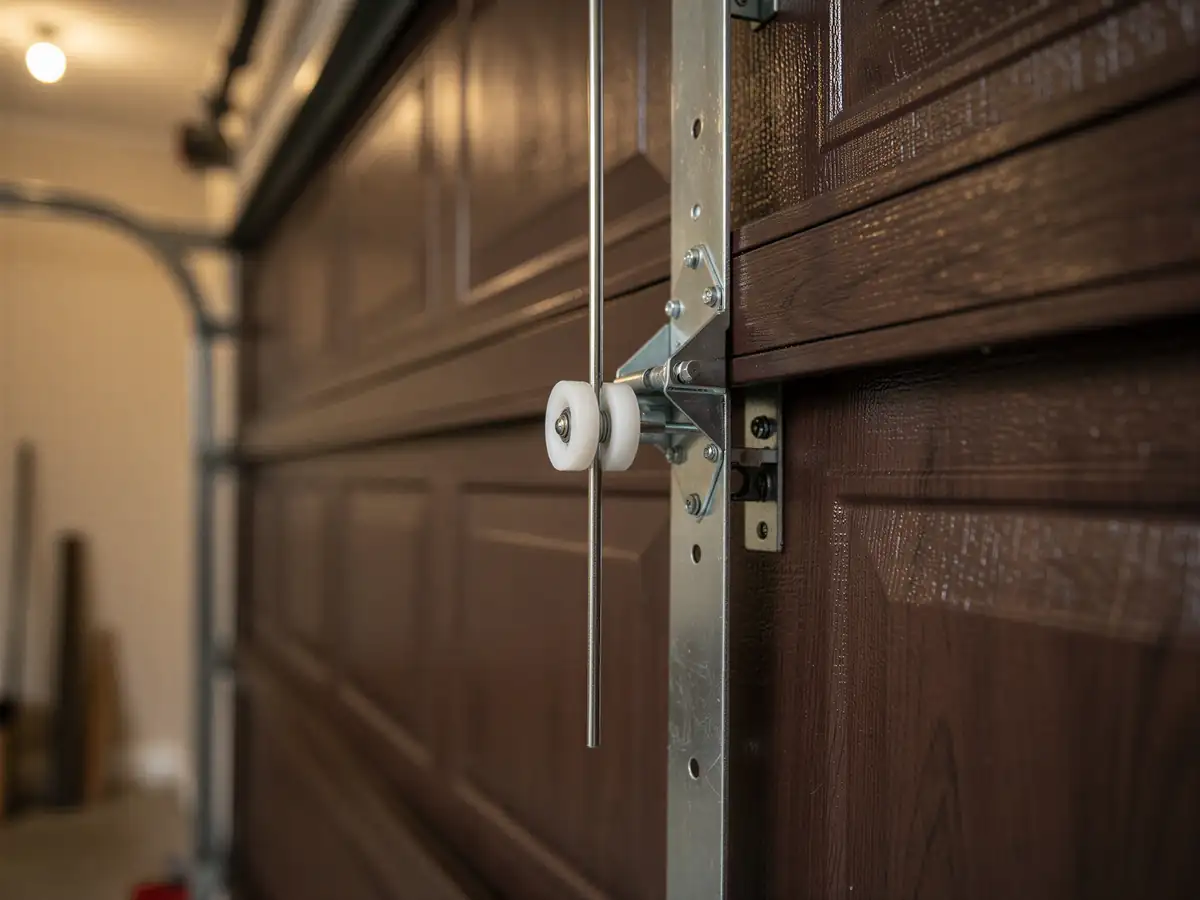
It's a spring that was already compromised - by age, by cycle count, by salt-air corrosion - and the temperature drop was the final straw. That's worth knowing because it changes what you check afterward: not just the spring, but the cable ends and the bottom bracket for rust, since whatever weakened the spring has likely been working on them too.